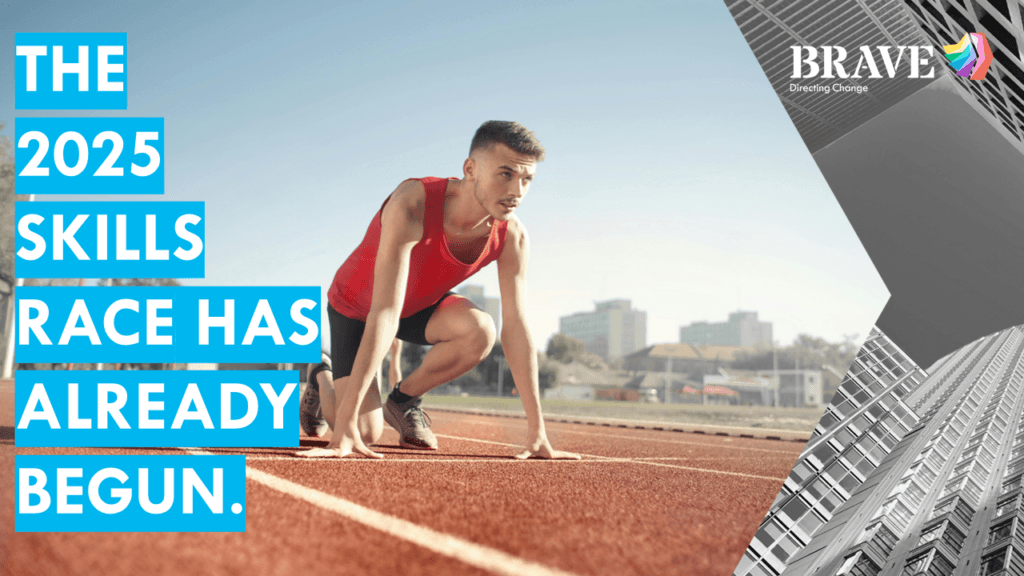

In 2025, we are already seeing how much the landscape of the workplace has started to transform, with the race to integrate work and life skills into employees becoming a critical focus for any business striving to stay afloat in an ever-evolving market.
This shift has been driven by multiple factors; a combination of technological advancements, ever-changing employee expectations, and last but not least a globalised economy that demands adaptability and continuous learning.
We’ve noticed this in a few ways. Our clients don’t always need a programme, many are creating bespoke content with us, or focusing on establishing needs and delivering key skills plus specifics for their people. Clients with larger businesses still need a programme but are supplementing with new innovative sessions to raise skills levels.
Requests for new content design from us have increased and topics like collaboration, boundary setting and accountability are high on the list.
Is this AI’s fault…? It seems to be blamed for everything these days! We think it’s one of the drivers. The rapid pace of technological change has made things like artificial intelligence, automation, and digital transformation more commonplace and welcomed. This has driven a wave of new technical skill requirements for employees to develop to keep ahead of the curve, but smart businesses know that technical skills alone are not enough.
These companies have recognised the importance of soft skills, such as communication, decision making, collaboration and even disagreement need to be delivered to balance the growth of their people. We’re getting more requests for 121 coaching than ever before, and more bookings for things like our BRAVE Conversations modules, enabling people to have the hard conversations in the right way. When you match this to the spike of interest in online workshops for emotional intelligence we can see that the tech advancement is impacting the choices for soft skills too.
As remote work and hybrid models continue to stay a part of life, clever businesses know they must equip employees with skills to manage their time, set boundaries, and maintain their mental health. All evidence shows that companies that invest in these areas are likely to see higher employee satisfaction, reduced burnout, and increased productivity.
In 2025, businesses need to understand that the traditional model of education followed by a static career is obsolete.
The race to build work and life skills also aligns with the growing emphasis on lifelong learning. Instead, they need to encourage employees to engage in continuous learning and development. This approach not only benefits employees by enhancing their employability and career growth but also enables companies to remain agile and competitive in our rapidly changing market.
We support this move and have ensured that our programmes have a wide variety of ways to learn. Yes, we still deliver comprehensive face-to-face training programs, but we also offer access to online courses and resources too.
In conclusion, the race to build work and life skills should be a critical focus for any HR and L&D teams in 2025. We think those that do this now will not only create a more adaptable and resilient workforce but also position themselves as leaders in their respective industries.
If you think we can help you develop your people, then get in touch.
We’d love to help you.
Sara