FREE PODCAST DOWNLOAD

We’re so excited to have been invited to talk about BRAVE and the power of having difficult conversations by the London Institute of Banking & Finance. ????????

It was a brilliant experience and we hope you love it. You can listen by clicking here.

We’ve also created a BRAVE Podcast Download that you can download & keep giving you an insight into what a BRAVE programme can do for you.

Get your copy here.

It’s time to flourish.

From languishing to flourishing.

Languishing became the buzzword we needed way back in 2021, mid pandemic, when it became the coined name for what so many of us were feeling.

A miserable mid-point between fed up and down and out depression but you couldn’t quite put your finger on what to call it. Fast forward to 2025 and for amny of us, that feeling has a sneaky way of rearing its head.

Maybe you just don’t bounce out of bed like you used to, or you do have energy, but just not in the same way. You know it’s not a feeling of ‘all is lost’ because you don’t feel hopeless, but you might feel like all the fun is being sucked out of stuff and you’ve just lost your general sense of direction.

Organisational Psychologist, Adam Grant called languishing the ‘neglected middle child of mental health’ in his NY Times article. We think that name is just perfect!

So, we spent time thinking about this and decided to focus this article on how to help you move forward from this dreadful fun-removing feeling.

So, what does it mean to flourish, and how is it different from languishing?

The way we look at it is if languishing is at one end of the road, the other far end is flourishing. When you languish you can feel disinterested, have a loss of focus and feel a little bit disconnected.

At the other end of that road is those who are flourishing and they’re experiencing engagement and joy in what they are doing. Flourishing can be said to feel like a sense of being connected to your life, your day to day and even towards the relationships you have, and the job you do.

When you flourish, you’ve got bags of energy and, more importantly, the will to do something with it. You’ll feel like you have direction and the courage to get on, do it and take ownership of your mental health and how you feel.

We did some research and found Dr. Martin Seligman. His research on flourishing says the best way to move from languish to flourish is using something called the PERMA model. Dr Seligman developed PERMA as an acronym to help him share the elements of what leads to flourishing.

We’ll share one thing we think you can do under each of his research headings, to see if we can help you onto the path of flourishing by cultivating the five PERMA factors in your life:

Use a gratitude diary. You might use a real diary, an app, or simply use the notes on your phone but record one thing a day that you’re grateful for.

We all have something that does it for us. Running each day, a comedy movie, time with family & friends, gardening or getting down to DIY. There is something in all of us that ticks the engage button. Whatever it is, do more of it as it builds your energy, passion and of course your engagement levels.

It’s often easy to let relationships drift when you languish, but in fact we need to reach out more, make contact, make new friends, start new conversations and network. Set yourself the challenge to start one new conversation each week and watch the confidence start to flourish with each interaction.

Make good choices with the work you are doing. We all need purposeful work, so make sure that even if not everything you do contains it, at least one thing each day has a meaning. Try planning for the future too, it’s a sure-fire way to get you to focus on something that is out of the here & now.

Set some small attainable goals, perhaps even using some of the tips we’ve given you above. Make sure to focus on what you have done and reward accomplishments. Rewarding yourself for getting things done helps you move from languish to flourish. The more you do it, the further down the road you move towards the land of flourish-ville.

So, what are you waiting for?

If you liked this article and it’s inspired you to leave languishing behind then share it with others to help them and get out there and start your PERMA actions to change.

At We Are BRAVE we’re full of useful insights that can help you, your teams and your business reach its potential. Get in touch to see what we can do for you.

#bravewins

Speaking to Others – From My Perspective

I’m Alex Manners. I’m proud to be an Asperger’s Champion, a motivational speaker, TV & radio presenter & author. I’m focused, determined and have a lust for life. I consider myself lucky to have Asperger’s because I believe it will be the catalyst that allows me to “pursue my passions” and achieve my dreams!

I present talks on “My Life Living with Asperger’s” to many different companies, law firms, universities, schools and autism groups. I have presented talks to places such as Coca Cola, Linklaters, Viacom, Zurich Insurance and the Autism Shows across the UK. I have also written many articles and had many TV & Radio interviews on my Asperger’s, Presented my own children’s radio show for two years, have started my own “Autism & Football” campaign, appeared on series 10 & 11 of “The Undateables” on Channel 4 and written my own book.

Presenting live talks

Presenting talks in in front of hundreds of people would be daunting for most individuals! My grandma once said that she would not be able to eat for a week if she had to present a live talk. However, I absolutely love presenting talks all about my Asperger’s, whether online or face to face. I am never nervous and like to look upon this ability as one of my ‘Asperger’s Superpowers’.

I was diagnosed with Asperger’s when I was 10 years old and have been presenting talks all about “My Life Living with Asperger’s” for the past three or four years. Before covid hit the UK I had never presented an online talk before. Suddenly that was about to change.

Online v face to face

At first, I found working online a challenge as I missed meeting people, travelling the UK and going on adventures. One of the most difficult things was that I could not see the reactions of people during a talk. I could therefore not gauge how a talk was going until the end. If I am being honest, I was only presenting talks online due to covid so I was in a pretty stressful place anyway.

Now I am presenting nearly all of my talks online and I have grown to love working in this way. Firstly, I can reach lots more people from all over the world. I am not limited to how many people can fit in a room so can essentially speak to as many people as I like. When presenting face to face talks, I can only fit one or maybe two in a day due to the logistics of travel. Now I can present up to five talks a day. I can also work from home, in my own office, in an environment totally suited to my needs.

Travel and public transport

However, the best thing about working online is that I don’t have to travel. Traveling can be the most challenging part about my work. What happens if one of my trains is delayed or what do I do if I lose my ticket. These are just some of the worries I have. Also, lots of people with Asperger’s struggle in busy environment and with certain sounds and smells. So, not having all of these travel worries is fantastic.

My advice

When presenting an online talk, I always make sure that I log in 10-15 minutes early. This gives me time if something goes wrong. I also ensure that I have a spare laptop, phone or device I can use should my main laptop stop working. My biggest worry Is always with the Wi-Fi. Luckily, I have never had a problem with my Wi-Fi yet during a talk. Our neighbours have a different internet provider and they have very kindly agreed that should our Wi-Fi stop working I can always go and work or present a talk in their house. So, having back up plans is really important.

When I am travelling to a venue by train, I always ensure that I get the train before the one I need. It is better to arrive early than be worried about being late! Another thing I always do, is print off any tickets. This is encase I have no Wi-Fi on my phone or my phone runs out of battery. I also print of my directions and times of each train. What I try to do is minimise an many possible problems as I can.

When I am presenting a talk, I always pretend that I am speaking to my parents in the living room. If there is something or someone I am familiar with then I can always focus on them during my talk. I also ensure that I can always see a clock. This helps me to dictate the timings of my talk.

What if you deliver a training session and a delegate has Asperger’s?

When you are speaking to somebody with Asperger’s there are a few things that you can do. Explain things in as much detail as you can, avoid using any idioms, phrases or sarcasm, give them more time to answer a question and don’t worry if they are not giving you any eye contact. Also, if you are asking them questions then closed questions are always better for us than open questions.

Always have a quiet space that the individual can use if they need a short break or if they become a little stressed. Adapting the environment is also very important. So, if they don’t like sitting near a clock due to the ticking noise then allow them to sit further way from the clock. If you know this individual will be present before the training starts, then send them over as much information about the training as you can beforehand. Include the structure of the session and any photos of the room or location. When sending over this information, it may be a good time to ask them about any adjustments that can be made to help them on the day.

Conclusion

Whilst having Asperger’s can be a challenge, it is also something that I look upon as a positive. Being able to start my own business and present talks in front of large audiences is definitely two of those positives or ‘Asperger’s Superpowers’. I never feel nervous speaking in front of large numbers of people and am very brave to be able to share my story to educate and inspire others. I also feel extremely lucky to have been able to manage my Asperger’s over the past 25 years. Because Asperger’s is a lifelong condition it will continue to pose many challenges. But those positive elements are the things I like to focus on every day. If I did not have Asperger’s, then I would not be Alex Manners.

If you want to achieve something in life and have the drive, determination and ‘never give up’ attitude, then I believe you can achieve anything.

Want to learn more about me or Asperger’s?

Grab a copy of my book, “That’s Not Right! My Life Living with Asperger’s” on Amazon in paperback or kindle.

My Website: www.thealexmanners.com

Bringing Reward into 2022, one baby step at a time. 

A Reward department often covers more than you think, and it’s the department everyone benefits from, even if sometimes they don’t realise it.

What I’ve seen is that the reward options can usually be pretty standard and similar across many organisations. You know the usuals! Competitive pay – check! Pension – check! Holidays – check! Healthcare check! You get the point.  

While this is fantastic, and all of these are great benefits for your team, the approach to reward can often be slowed down by process, implementation, and a little red tape.  

So, how do you modernise and simplify the approach? 

In an ‘ideal world,’ where unlimited budgets, innovative technology and workforce devices are the norm you can do a lot. Some start-ups and cash rich businesses are now issuing credits for reward, so you flexibly create your package, choosing what matters for you. Bike for Work Scheme…but not interested? Then don’t choose that option! Sadly, we don’t live in the ‘ideal world’ and this approach is still new, but some evidence is showing very few schemes can truly be that flexible as it’s difficult to make every benefit optional, so core benefits have to be included. That said, we’re keeping our eyes peeled on how that works out and storing ideas for the future. 

For now, we need to work with what we have, and some smart baby steps is enough to get our ball rolling. 

Some steps to get your reward ball rolling. 

  • You must ensure you have a real, in depth understanding of the business from all perspectives.  
  • Rewards and benefits look vastly different from an office to a sales floor and it’s essential to talk to your people, in whichever way works best, to get to the real insight. 
  • Taking the time to understand what is important to colleagues and the profile of your workforce is also really important.  
  • Make sure you have considered diversity, age profiles and generations when considering reward solutions.  

Considering Multi-Generational Workforces 

As we enter 2022, we will see more of the five generations in the workplace than ever before. 

If you’re unsure where you fit, I’ve included the years of birth.  

  • Traditionalists – born 1927–to-1946 
  • Baby Boomers – born 1947-to-1964 
  • Generation X – born 1965-to-1980 
  • Generation Y (Millennials) – born 1981-to-2000 
  • Generation Z – born 2001-to-2020 

The amount of technological advancement that has occurred between the birth of the very first traditionalists and Gen Z is so vast it’s created two completely different life experiences. When a Baby Boomer got their first job, arriving to see a computer at each desk wasn’t the norm, whereas a Millennial and Gen Z have never known a world without a computer, a phone, mobile and probably a laptop. 

In our business, 59% of our workforce is currently either Generation “Y” and “Z”, 23% Generation X and 18% Boomers. 

Imagine the implications on reward when you are trying to engage five different generations at once?  

Another crucial factor to consider is your colleague profile mix.  

Here’s what I mean in real terms. If we did bite the bullet and jumped straight to a credit scheme where you pick your own benefits the colleague mix can cause issues. 

If your business has a substantial number of colleagues who are part time this means that they might not have enough credits to choose anything over and above the basic, expected reward benefits and this could mean that they miss out on some of the benefits that they would ordinarily have been available to all. It’s something that we have to consider with a workforce of our size. It must be fair.  

Based on my experience I totally agree that one size certainly does not fit all anymore but using the data available to support key decisions will certainly help!  

What did we do at The Midcounties Co-operative to modernise and simplify? 

Our first steps were to look to modernise how we issue colleague thank you vouchers. A fantastic way to reward our teams, loved by everyone, but they had a historic flaw.  

Previously the vouchers were printed on paper, posted out to stores and often had to be replaced when colleagues misplaced them, damaged them or they fell subject to many other mysterious fates! 

After plenty of research, looking at data, and of course, talking to the very people who were due to be in receipt of them we hatched a digital revolution plan. We launched a new digital solution via our app where colleagues would instantly see their reward vouchers on a mobile or desktop device. This is one step for Claire Foster and the Reward Team, and a giant leap for the Midcounties Co-opeartive teams! 

We of course considered our colleague mix and spotted that some people might struggle because they don’t have a smart phone or laptop at home.  

We made sure we supported those colleagues by allowing access via the store computer and if nothing else worked, we could still arrange for a paper voucher to be sent to them and are working with our Utilities team to think about how we can provide affordable smart phones and tech support for our colleagues who do not currently have a device. 

Interestingly, several months after a successful and well received launch, only 1.9% of eligible colleagues have requested paper vouchers. Result! 

Is this solution I’m sharing with you perfect? Of course not!  

But what is important is that we have already held a lesson learned session for improvements/changes we want to make. We’re talking to our people. We’re reviewing what we have done and how we could improve it. And that’s real progress towards modernising and simplifying the reward offer we have right now. 

So, in summary.  

Work with what you have got.  

Look at the data.  

Talk to all the people.  

Take an educated risk.  

Make a reward baby step.  

Keep an eye on the rest of the world as they change reward and learn from their lessons.


Claire Foster​ | Head of HR and Reward | The Midcounties Co-operative

So, we’ve changed, and we’d love to tell you why.

Well Prepared Training was born 6 years ago and over that time has successfully designed and delivered incredible learning & development, coaching and bespoke solutions for our clients. Our ethos has always been BRAVE and to ensure people feel that way after working with us.

Everything we did helped us realise we had something really unique when it came to our BRAVE programme. We knew that the beating heart of our business was bringing back the ‘art of disagreement’.

We spent the last couple of years paying close attention to the shifting dynamics in the wider world including social, economical, cultural and political changes. We started to see recurring themes and patterns which reinforced our belief. Now was the time to change.

We listened closely to our clients & our delegates for their feedback and they also told us loud & clear that it was increasingly hard to get people to discuss different opinions, without falling out. Our offer couldn’t just be about resolving conflict, it had to offer more, be wider, be broader and all encompassing for a business.

We evolved. We embraced our core principles and reinvented our mission, vision and values.

We have become We Are BRAVE

What was always our ethos has quite simply become our company name, influencing everything that we do.

We’ve reshaped our business around the 4 key principles of BRAVE. Our offer is enhanced, refocused and ready to help you and your people say ‘we can do the hard things’. You’ll learn about THINK, SPEAK, DECIDE and DISAGREE along with BRAVE and KIND.

We hope you love what we’ve worked on, we’re very proud to invite you to learn more at www.wearebrave.co.uk

Sara & Rhi.

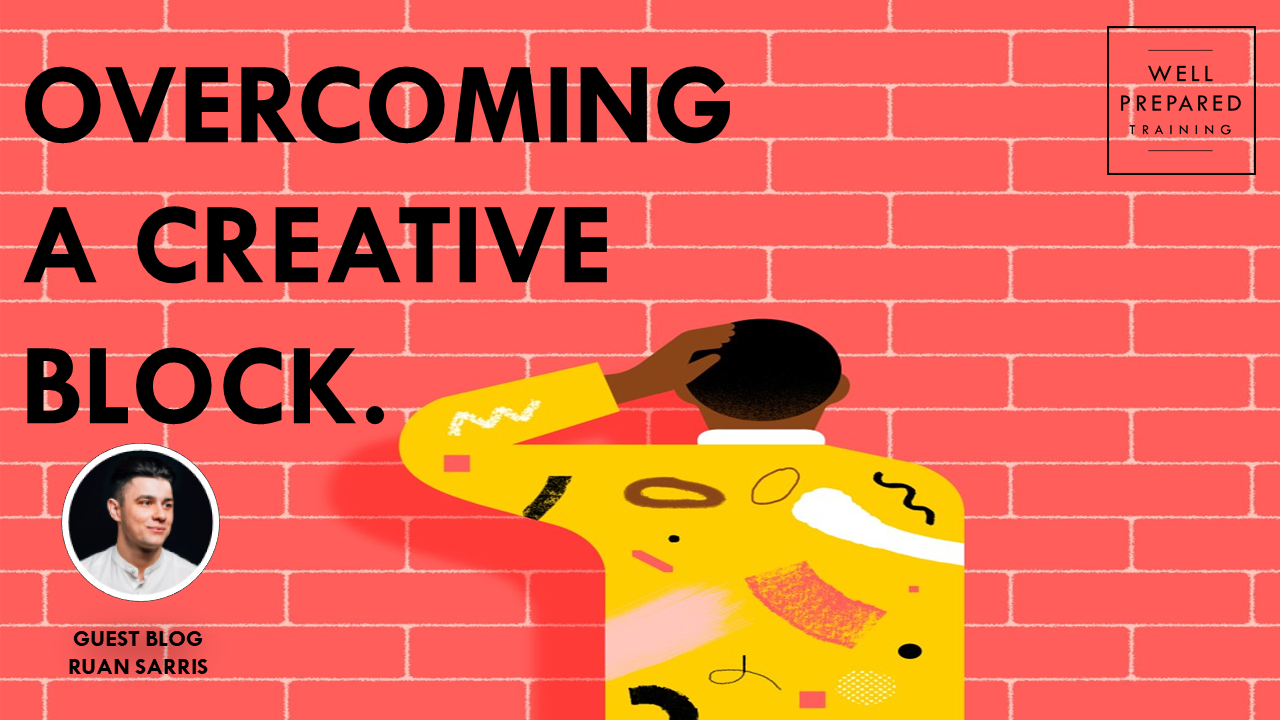
Overcoming a Creative Block.

The infamous creative block.  

That moment when you receive a new client brief with vague information, huge expectations, next-to-no budget and an unrealistic deadline. The time is 9.01. The first coffee hasn’t even scratched the surface of your functioning caffeine threshold. You know it’s time to get creative with your response. But the cogs in that space between your ears just aren’t functioning. You start to feel tense. Your heart starts racing. It’s fight or flight.  

Sound familiar? *Gulp* 

Okay, so I may have exaggerated some of those points, but that’s the creative block in a nutshell. It’s an unpleasant experience, to say the least, and one that as a Creative, you want to avoid at all costs. Working in a fast-paced creative communications agency has helped me pick up a few nifty tips and tricks that give me creative inspiration to prevent such ‘blockage’ (ew), which I’m going to share with you – being the generous person that I am. 
Buckle up, grab a brew and hang in tight. Here’s my four top tips for creative inspiration… 

One: Idols 

Idols. We all have them, but what about idols specifically within the creative industry? That’s a whole new kettle of fish. Having creative idols that produce and create works that amaze you can be hugely inspirational. Artists, sculptors, designers, art directors, photographers, you name it. There are so many inspirational figures out there in the field of creativity that can inspire your next project or proposal with their work. For me personally, it’s Virgil Abloh, the founder of clothing giant Off-White and Creative Director of the Luxury fashion house Louis Vuitton, and Daniel Arsham, sculptor, artist, visionary and Porsche 911 enthusiast, both of whom have a huge social following. But your inspiration could be any creative person, big or small. My challenge to you: pick up to three creatives within the industry that you’re interested in following. Once or twice a week, have a browse of their social handles and websites, or if you know them personally, why not get in contact? Keep track of what new weird and wonderful ideas they’re generating and see if you can unpick any elements of them to inspire the creative idea for your project. 

Two: Exercise 

You may be cursing at me from behind your laptop screen at the fact I’m suggesting you exercise to be more creative. “How will exercise improve my levels of creativity?”, I hear you ask. Well, there’s actually science behind it; just earlier this year, author and health/fitness reporter Gretchen Reynolds reported a scientific discovery that found “active people come up with more and better ideas during tests of their inventiveness than people who are relatively sedentary.”  
In my own experience, I’ve found that taking up running has been hugely beneficial not only to my physical and mental wellbeing, but also great for generating creative ideas too, as my mind isn’t clouded by other thoughts and worries when I’m channelling my focus on exercise. Why don’t you give it a try in your spare time and see what creative ideas come to you? 

Three: Smart scrolling 

It can be easy to lose an hour or more with what was meant to be a ‘5-minute thumb scroll’ on your phone. What I’m proposing is ‘smart scrolling’, which is exactly what it sounds like… be smart with your scrolling. How does it work? Simply swap out the mindless scrolling through photos of your mates out on the weekend for content that will inspire you creatively. Hop onto YouTube and check out the latest film trailers and music videos. What techniques did the film crew apply? What was done in the edit suite that made the content exciting and engaging to watch? How was the thumbnail designed to draw you in? By re-framing the purpose of your social scrolling, you can be smart with your time and be both entertained and creatively inspired simultaneously. The same applies to the Ads that bombard you online. Think about why they were shown to you specifically, what the key call-to-action was, how the copy was laid out and what colours were chosen to grab your attention. Next time you scroll, try this technique and, if you want to go a step further, why not add your findings to a Pinterest boardor scrapbook folder on your desktop to save for a rainy day when those creative cogs aren’t turning? 

Four: And breathe… 

This final top tip may seem ridiculously obvious but it’s crucially important. This is all about time; give yourself enough time and breathing space to allow those amazing creative ideas to develop. Brilliant concepts need time and space to flourish, so make sure you budget enough time to allow for this. A great technique is booking ‘focus time’ in your diary: where you don’t have any meetings, don’t accept unimportant incoming calls or emails and can focus solely on developing the creative idea. Another is taking regular breaks throughout the day, where for a short period of time you switch your focus to a completely different activity. It’s an opportunity to recharge and refuel so that you have a clear mind to come back, boss your brief and create something amazing. 
… And that’s it! My top four tips that almost anyone can do in their spare time to keep their creativity ticking along in the background, always on standby for when that challenging brief lands in their inbox, ready to create a wow-worthy response.  
If you stayed to read the whole article, here’s a bonus feature from me to say thank you… 

Extra tips: Useful websites for inspiration 

Ruan Sarris 
Creative at DRPG, creative communications group 

5 REASONS TO GET YOUR TEAMS ON HOLIDAY.

People are working hard and times feel tough. Surely it’s time for a break? And yet, for a lot of people they’re just not booking any annual leave?

Of course, there could be reasons for this, (cost of living crisis anyone?) It can also be that teams who love what they do, work hard and are passionate about the mission you’ve created might just feel a little too committed to work.

Your job as a manager or leader? To get them out the door and on a break.

Woah! Surely if they don’t want to go, and they’re happy at work then we should just let them continue to be amazing and help the business, right? Wrong.

Read on to find the 5 reason you really should be making sure everyone gets a decent holiday, and you might be surprised at the payback it gets you.

THEY’LL PERFORM BETTER WHEN THEY GET BACK

When team take regular holidays, they generally come home more motivated about their work and go on to perform better than those who don’t take as much holiday. They’re also less likely to have an accident in the work environment. Who knew? Guess what? They’re also likely to have lower stress levels too which can in turn help levels of sickness and absence.

IT GIVES THEM CHANCE TO REST THEIR BRAINS

A holiday can provide the perfect opportunity to catch up on sleep. We all need a few extra ZZ’s, but the brain needs a time out too. Life is full on, and we forget that our brains are on, almost all the time even when we’re not aware of it. A holiday can lighten the load. A lack of sleep and stressed our brain are big contributing factors to decreased performance at work, and potentially, if not addressed could affect a team members mental health further down the road.

IT’LL PROVIDE A WELCOME BOOST TO WELLBEING

When the team book, and then get their annual leave approved it gives them a sense of achievement that they have worked hard to be given the time off. Yes, we know they’re entitled to it, but there’s that strange satisfaction to knowing you earned that break, and it is yours to take. Anything that helps your team feel valued works in your business’s favour as they will feel motivated to come back to work and perform effectively.

IT SHOWS YOU ACTUALLY CARE ABOUT THEM

When you practically encourage your team to take holiday, perhaps even by doing so yourself, it shows them its ok to do so, and releases the pressure for those most committed to work. It’s important to help show them the benefits of taking a break, and why you want them to do it, in whichever way suits them. Great practice here is ensuring they know a break means a break and no emails on the beach or calls in the hotel room are allowed. Empower them to ‘switch off’ and reap the rewards or working hard.

YOU CAN EASILY RE-ENERGISE YOUR TEAM             

When you create a work environment where your team work hard, and play hard, it means you have the luxury of bringing back that passion, energy and enthusiasm that a refreshed, well rested team member brings back to the workplace. Remember, behaviour is contagious, so having that kind of energy bouncing around is priceless. Happy teams work harder, better and faster so why would you not want to help create that?

SO, WHAT ARE YOU WAITING FOR?

Check those annual leave spreadsheets and see who is holding back. It’s perfect holiday season so see who you can actively encourage to take a break first.

100 Coaching Questions

Whether you’re coaching for performance, to have a brilliant conversation or to help someone grow, using a guide of carefully curated coaching questions will always make life easier.

We’re giving these away for free by simply clicking and downloading the file below.

Enjoy!

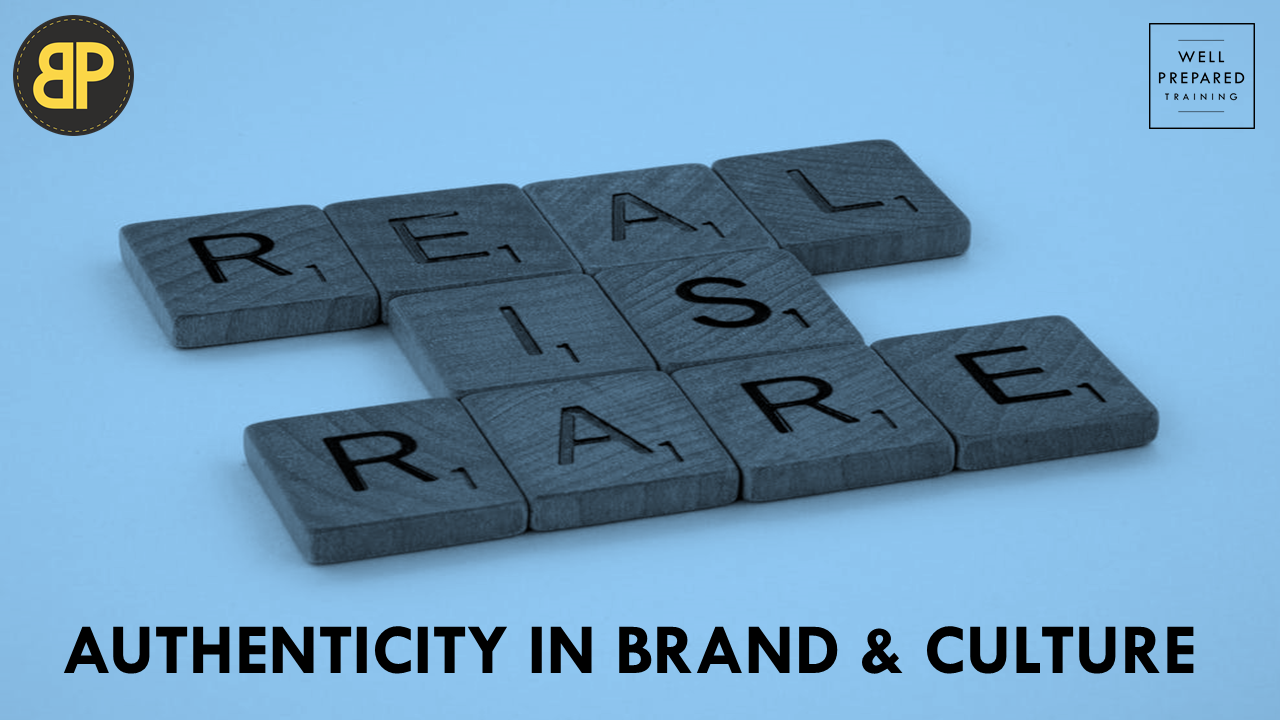
Authenticity in brand and culture

“Be yourself and they’ll love you” is advice that many of us will have received over the years – be it ahead of a job interview, a date or first day of school. And it is fabulous advice, as long as you know what ‘being yourself’ is. 

If you don’t it’s a bit like being told to ‘walk naturally’ or ‘stand naturally’ – your brain immediately goes into overdrive. “Is this how I normally move my legs? Do I normally swing my arms this much? When did my hands become such a big part of my body?”

But at the same time, when we’re in safe environments where we can be ourselves and relax into us ‘at our best’ life is so much easier, and we don’t really think about it at all. 

So, what makes for a safe environment – often one in which we have clarity and parameters? 

And how do we do this when we are an organisation rather than an individual? An organisation full of individuals who we want to both be themselves and represent us at the same time? Tricky right?

So we could give everyone a really long list of what to say when they answer the phone, how to dress, and murder their autonomy, creativity and drive with processes and procedures. But don’t forget the twice monthly quiz to fulfil our social needs! 

I jest of course, although for many organisations this is the only way they have entertained a balance between consistency of their brand and a ‘good’ culture, the reason often being that they don’t know what they really are at their best as a whole. And there is no shame in this – many businesses grow and grow fast so what may have started as a really clear founder led definition or ‘sense’ of them is diluted overtime and / or doesn’t take into consideration the new perspectives or market changes. It happens all the time. 

If we define what the organisations is, truly, at its best, embrace it, embed it throughout all we do and endeavour to live it we may just crack it. 

So, let’s pause for a sec – and as L’Oréal cringely used to say – here comes the science bit! 

Why does it matter that this definition of the organisations at its best is authentic – why can’t we just make it up based on what we know our customers want us to be?

Well in a 2017 study 90% of millennials said that authenticity was a key driver in their decision to support a brand. And don’t be fooled that it’s just these youngsters – GenX and Boomers followed closely behind with 85% and 80% respectively saying the same thing. 

A 2019 study also showed that brand authenticity has a substantial effect on perceived value and brand trust.

But no, you can’t fake it – a third of respondents said that they had turned away from brands that they perceived to be inauthentic – to say one thing in their marketing and behave in a different way. 

Think of it as a friend being two faced. You are loyal to them but once they are two faced, you start to question your relationship, the trust is gone and with it your investment in them and your friendship. #over

So, now we’ve established why it needs to be authentic for customer loyalty let’s consider why it’s also a huge engagement and performance driver internally – reducing waste and increasing buy-in from colleagues. It’s back to the point that we started with, it’s much easier to be yourself in a safe space, with clarity and parameters. 

When a company or an individual can easily define what they are like ‘at their best’, it makes it way easier for the people around them to do the same. It helps others know how to act, feel and respond because they get ‘it’. They get the culture and brand they are dealing with. 

A Glib Example:

Sammy’s Gin Company strives to make the best possible Gin. (Ok that’s great, so what?)

So that people really enjoy it and have a great time. (Ok so do we care about great Gin or them having a great time?)

Ok, so maybe actually we want to make great Gin because we take pride in quality but what really matters to us is that people have a great time. And actually, we know that people have a great time in many different ways so we don’t want to stipulate that they can only drink it in certain way – we want them to do whatever they want with it – we are not precious! (Brilliant, getting more of a feel of who you are and what’s important to you now, sounds like my kinda Gin!)

Therefore, externally we are going to talk about “Gin for a great time, whatever a great time looks like to you.”

That’s the marketing sorted but that’s just one segment of our brand, for it to be authentic it needs to be right through us. Our leadership needs to have a conversation about what ‘a great time, without compromising on quality’ means to them. 

If we look at our suppliers – do they have a great time with us, or do we make their lives hell? Are our payment terms outrageous meaning they are always balancing and nudging us?

Do our colleagues produce quality work and have a great time doing it? If not, what’s stopping them? When we delve into it, we may find that they want more freedom, more direction, more clarity, less pressure and stress. Unrealistic targets may be a barrier to a great time which is then a wider conversation to understand why the targets are unrealistic. Our working environment may be a barrier to a great time – tiny offices, bad lighting or uncomfortable chairs. Our holiday allowance may be a barrier, a lack of anything bar statutory sick pay may cause anxiety and be a barrier to a great time.

You get the picture. 

And, if we look at our environmental impact, do we deliver a great time for people now and in the future? Are our bottles recyclable or will they stand in the way of future generations having a great time? Are our corks actual cork or are they a plastic look-a-like?

Once we as an organisation start to demonstrate the meaning of ‘a great time, without compromising on quality’ our people will begin to understand it and use it as the filter through which they too make decisions. It allows people to experiment and innovate within parameters that we have all agreed to and in doing so gives them accountability and responsibility – and a shared focus. 

In this case this isn’t a great time doing whatever you fancy, quality is in the mix too which helps to keep our team realistic as well as idealistic.

In defining ‘quality’ and our belief of what constitutes or is a barrier to ‘a great time’ we can rethink our internal strategies and the drivers of the business. 

Some might call this a vision, a purpose, a mission or a brand promise – in all honesty call it what you like and frame it as you like – as long as when something tough comes along you stand by it, through thick and thin. Because the moment you make a decision that contradicts it you’ve lost. You’ve lost your integrity; you’ve lost your people and you may lose your customers too.

But don’t focus on the risk – focus on the potential! 

Unearth what you are at your best or what it is you are truly trying to do. 

Embrace it, Embed it and Live it. Simple as that! 

You can learn more about our Guest Blog writer, Sammy Burt and what she does by clicking here. https://www.yourbackpack.co.uk/
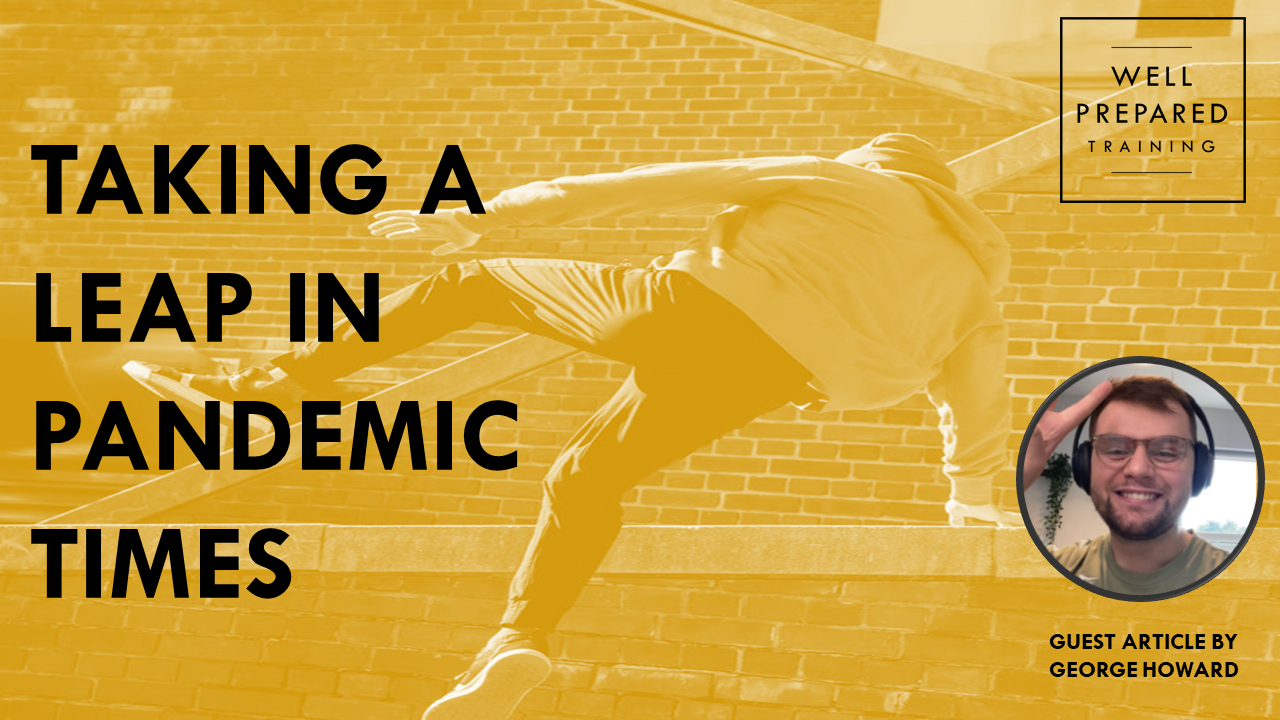
Taking the Leap in Pandemic Times.

Who would have thought starting a new job in the middle of a global pandemic would have been a good idea? For many people it made sense to just stay put. Well, I’m not many people and it turns out, in my case it was totally the right decision for me. I have zero regrets.

Back in March 2021 I took the leap and started in a new learning & development role at the global phenomenon that is Gymshark.

I’d luckily had a great head start in L&D, and I had already started to fall in love with helping others learn and develop. But this time, a new job, in a pandemic, in a completely new environment, and a new company, and a new sector with a very new style and most terrifying of all. New people. You’re probably starting to get my drift!

Tackling the nerves.

My biggest nerves before starting my new role were not being able to forge those all-important connections which set you up for success in the organisation. How on earth was this going to work when I was at home, and they were on a screen?

By the end of my first day, these thoughts didn’t even cross my mind. You quickly begin to forget how you’re working & building relationships with people you’ve never met in real life. Virtual communications saved the day and helped me go from nerves to excitement and engagement.

Onboarding in a virtual world.

The key message of the onboarding process was to take your time, understand the business & get to know your team. This, along with plenty of introductions, catch-ups & virtual tea-breaks created a platform for these connections to grow. Now, with me being nearly 5 months into the role, I can say with 100% confidence that the rapport that has developed is some of the strongest I’ve ever had in a work environment, and for me, is quite literally priceless.

The best bits about starting a job during lockdown are all the perks that come along with working from home. No commute, flexible hours and all that jazz. What I found added the greatest value in my induction period was having more time to digest all the information that is heading your way when you’re the new boy. It really helped me to ensure that I had time to really ‘get it’.

Unexpected benefits.

An unexpected (yet golden benefit) was meeting people with one added extra. Their names were in the bottom corner of each screen making it easy for me…and meant no awkward forgotten name moments.

However, I wasn’t complaining when URL transitioned into IRL. I was amazed by Gym Shark HQ. The building, the workspaces…and don’t even get me started on REFUEL the amazing in-house food and drink hub. The first day in the office really solidified my comfort in my decision & my role.

Culture makes it work.

The culture at Gymshark is just as you expect; authentic, honest & ever evolving. For me, the most monumental part of the Gymshark culture is ‘fail fast’. Feel safe in the environment which you’re in, so much so that you’re happy to make mistakes. This helps us learn and evolve. This one has been key ?.

My advice?

In summary, and not to steal some other sporting companies’ strapline, just do it.

You will always have nerves, you will always have self-doubt, but for me, I found it the best time to make my leap, supported by strong inductions, an incredible culture, and the benefits of working at home, and then in a hybrid role. Embrace it. Absorb it. Enjoy it.