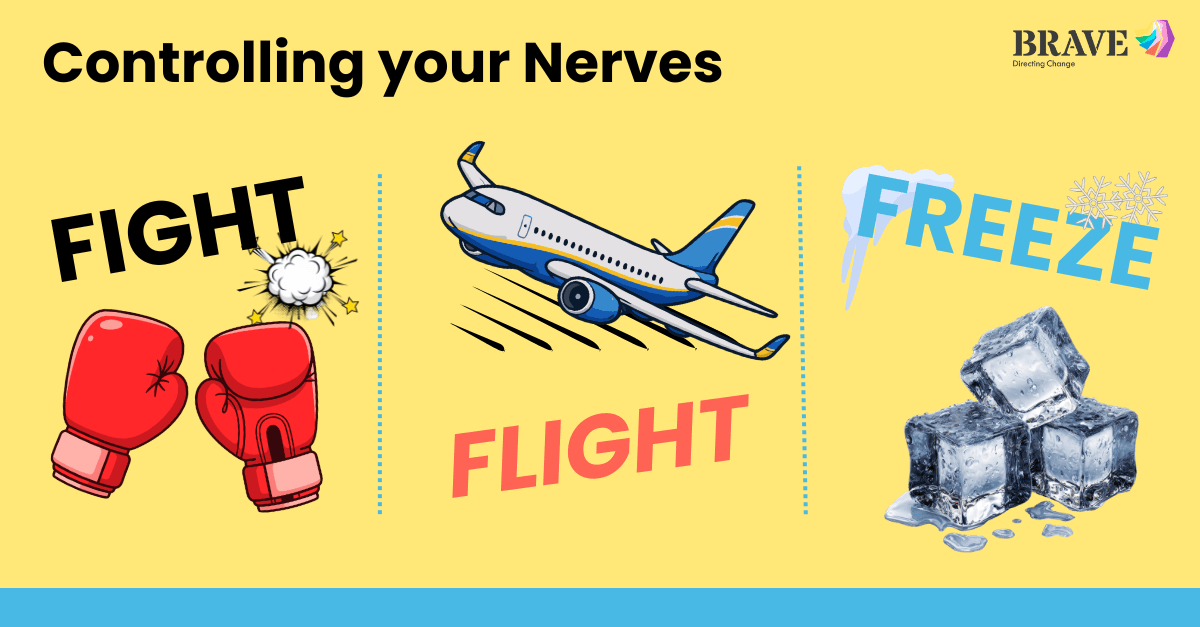
Are you Fight, Flight or Freeze?

One of the most common questions we get asked is “how do I control my nerves” 😬 when presenting to others.

We figured rather than than tell you, we’d show you 😉

There are 3 Micro Learning Videos for you to watch to grab the knowledge.

You can watch the series below 👇

Learn about Fight

Learn about Flight

Learn about Freeze

If you love learning in bite size videos then sign up to the BRAVE Newsletter to get free access to the entire back catalogue. 💻 🎥

Leadership Conversation Starters

When it comes to leaders & communication skills, every step matters. 👣

The power of asking incredible questions reaps rewards. 🏆

We’ve created a simple Leadership Questions Cheat Sheet.

And it’s totally free to download. 💾

Why Storytelling is the Communication GOAT

We’ve all sat through communication that was technically correct… and completely forgettable.

Clear, concise, accurate…and somehow still feels flat.

Then someone tells a story, shares a moment, describes a scene, makes you feel a feeling. And that’s when the whole room shifts. People lean in. They remember. They care.

Not as performance. Not as theatrics. But as meaning‑making. And it’s why storytelling is often seen as the greatest of all time skills.

When it comes to communication, in a world where attention is scarce and information is overwhelming, storytelling isn’t a “nice to have”. It could be the thing that makes your message land.

Storytelling Is Already Everywhere. You Just Don’t Notice It

You’re surrounded by storytelling every day. It’s how humans make sense of the world. Don’t believe us? Let us prove our point.

Healthcare: Doctors explain treatment plans through patient stories “I had someone last month with the same symptoms…” because stories build trust faster than data.

Politics: Leaders don’t just present policies; they tell stories of “the family I met in Manchester” because stories humanise complexity.

Sport: Coaches use stories of past comebacks to shift belief and energy in the team.

Parenting: Kids don’t respond to instructions; they respond to stories “Remember what happened last time you didn’t wear your coat…”

Work: The colleague who gets buy‑in isn’t the one with the best slide deck. It’s the one who says, “Let me tell you what happened when we tried this last year.”

Storytelling is not a creative superpower. It’s a human default. You most likely already use it. Now the trick is to start it’s using it on purpose.

This is a lightweight structure anyone can use and absolutely no drama school attendance required.

Start with the moment, not the message

Most people start with the point they want to make. Storytellers start with the moment that brings the point to life. Ask yourself some key questions about what you are trying to communicate.

What moment changed something for me? Was it a conversation, a mistake, a turning point or an ‘aha’ moment. That is your anchor.

Set the scene in one sentence

You don’t need a novel. You need context. One sentence is usually enough. Here’s a fe examples:

“Last year, during a project that was going off the rails…” “Five minutes before the meeting started…” When I first became a manager…”

What you do here is set the scene. Scene = relevance and importantly, relevance = attention.

Share the tension (the human bit)

Every good story has a “something was at stake” moment. It doesn’t need to be dramatic. It just needs to be human. Nine times out of ten you’ll need to be honest, and you might need to be more open than you are usually, but trust us, it works.

The kind of things you might share are “I didn’t know what to say” or “I realised I’d been avoiding the real issue” or “I could feel the team losing confidence”

This is real. This is tension we have all experienced. Tension is what makes people care.

Reveal the shift

This is the moment something changed, it could be your insight, your learning or even your realisation. It’s the emotional payoff.

This might sound like “That’s when I realised clarity wasn’t the problem, courage was” or “I understood that people weren’t resisting the idea; they were resisting the way I was communicating it” or “I saw that the story I was telling myself was holding the team back”

The shift here is what makes the story so meaningful.

Land the message in one clean line

This is where you connect the story to your point. Keep it super simple. One sentence.

Make sure it’s clear, direct, no fluff or filler. It could look like this:

“That’s why clarity matters more than confidence” or “That moment taught me that people follow honesty, not polish” or “It reminded me that communication is a shared act, not a solo performance.”

This is the line people will walk away and remember.

Because stories bypass resistance. They make your message relatable, memorable, and emotionally resonant. We live in a world crwoded with data right not. Data informs but it doesn’t move you. Stories do.

At We Are Brave we know that when people are overloaded, distracted, and sceptical, the storyteller who can tell a simple, honest, human story is the one who stands out. The good news? We can help you become that storyteller.

Get in touch today. We’d love to chat.

You can download the The BRAVE 5‑Step Storytelling Process Infographic here.

Communication that lands

Communication used to be about clarity. Then it became about confidence. Then storytelling. Then “executive presence”.

In 2026, none of that is enough on its own.

We’re living in a world where attention is the new scarcity, nuance is the new fluency, and people can smell inauthenticity faster than ever. Communication that lands now requires something deeper: the ability to make people want to listen to you, not because you’re loud, polished, or persuasive, but because you’re real, relevant, and resonant.

For us this means ensuring that your communication really hits the spot, time after time, and always lands where you need it to.

In 2026, people aren’t listening for the loudest voice. They’re listening for the voice that helps them make sense of complexity. Speaking up now means:

• Naming the thing others are skirting around

• Bringing clarity to foggy conversations

• Offering a perspective that moves the room forward

It’s not about taking space. It’s about creating direction.

The question isn’t “How do I speak up more?”

It’s “How do I speak up in a way that matters?”

We’re overloaded with information, options, and noise. Clarity has become a competitive advantage. We think clear communication in 2026 looks like this:

• Short sentences

• Clean intent

• One message at a time

• No jargon unless it earns its keep

Clarity isn’t dumbing down. It’s lifting up and instead making ideas accessible, actionable, and human.

People follow your clarity because it feels safe. People trust your clarity because it feels honest.

Traditional communication advice focuses on how to project your message. 2026 communication is about how to attract attention.

You make people want to listen when:

• You speak from lived experience, not performance

• You show your working, not just your conclusion

• You bring curiosity, not certainty

• You create space for others, not just airtime for yourself

People lean in when they feel invited, not instructed. This is the shift from broadcasting to belonging.

Storytelling has been trending for a decade, but in 2026 it’s evolving. The best. and most powerful stories are:

• Short

• Specific

• Emotionally honest

• Anchored in a moment that changed something

Not “Once upon a time”. More “Here’s the moment I realised something important”.

Stories land when they:

• Reveal something true

• Create connection

• Offer meaning, not moralising

In a world of AI-generated everything, human stories are becoming the new currency of trust.

The biggest shift we need to make? Communication is no longer a solo performance. It’s a co-created experience.

The leaders who communicate best now:

• Ask better questions than they give answers

• Treat conversations as collaborations

• Make others feel smarter, not smaller

• Use communication to build agency, not dependence

This is communication as a practice, not a skill. A way of being, not a technique.

If you want your communication to land in 2026, we recommend you do these things, and we can help you get there.

• Speak up with purpose — say the thing that moves the room forward

• Be unmistakably clear — clarity is kindness and leadership

• Create pull, not push — make people want to listen

• Tell stories that reveal, not perform — authenticity beats polish

• Co-create the conversation — communication is a shared act

This is the We Are BRAVE way. Communication that builds agency, deepens trust, and makes people feel more human, not less.

If this communication landed with you, then drop us a line, we’d love to talk to you.
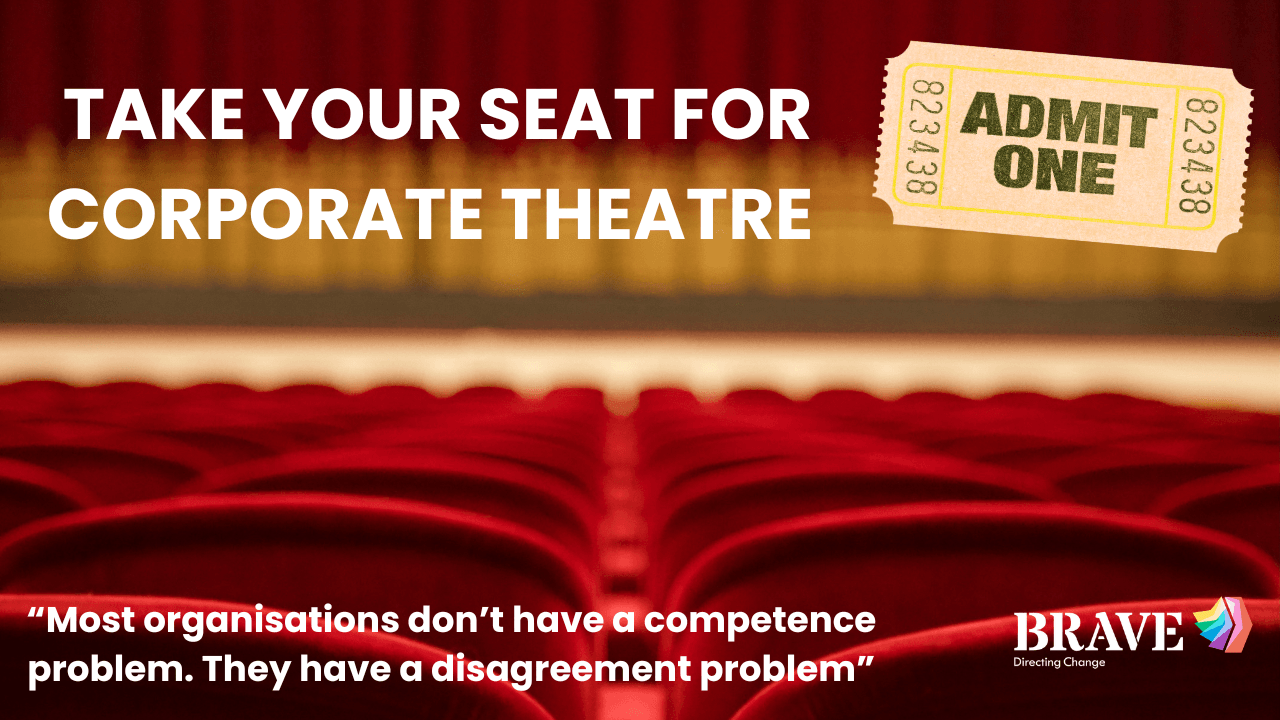
Your organisation doesn’t have a competence problem. It has a disagreement problem.

We spend a lot of time in business fixing the wrong thing. Better processes, clearer strategies, more training. But walk into most organisations and the real problem isn’t hard to spot — it’s the conversations that aren’t happening.

Picture a stereotypical leadership meeting. The agenda was circulated in advance. Slide deck on the screen. People say the right things, someone summarises the actions, and everyone moves on. Two weeks later, the same item is back on the agenda. Nothing moved. The needle stayed the same, but nobody’s quite sure why.

This is corporate theatre.

Let’s be clear, this is NOT deliberate dishonesty. It’s just the deeply human tendency to perform productivity rather than do the messy, uncomfortable work of genuinely disagreeing with each other. It happens everywhere, at every level, in organisations that would absolutely describe themselves as open and collaborative.

The root cause is almost always fear. Fear that if you push back too hard, it’ll get personal. Fear that challenging a colleague’s idea means challenging them. Fear that once a difficult conversation starts, nobody knows where it ends. So people hold back. They soften the message, read the room, and say something everyone can live with rather than something that’s actually true.

“Most organisations don’t have a competence problem. They have a disagreement problem.”

What avoidance actually costs you

There’s a version of conflict avoidance that looks, on the surface, like professionalism. Keeping things calm. Not making it awkward. Picking your battles. And sometimes that’s exactly right.

But when it becomes the default, and when topics quietly become undiscussable, or only in hushed ‘corridor conversations’, the cost adds up fast. Decisions get made without the full picture, because the people who had doubts didn’t feel safe voicing them. Teams go round in circles, relitigating things that should have been settled months ago. And the people with the sharpest instincts and most useful perspectives learn, through experience, that speaking up…well, it’s just not worth it.

The businesses most committed to avoiding conflict are often the ones drowning in it. It’s just gone deep underground. It shows up as disengagement, as office politics, as the slow drip of good people deciding they’d rather work somewhere else.

A different way to work

We are not here to make conflict more comfortable to ignore. Our work is about something more useful: helping leadership teams learn to disagree well. Giving you rhe skills, and the confidence required to hold truly difficult conversations without them turning into difficult relationships. We are here to help you build the kind of culture where the truth gets said in the room, not in the car park or venting phone call afterwards.

Our proven methodology is built around four principles that have been helping our cliemts get better at this for years. It’s not a checklist, but in fact it becomes a deep seated way of working that, over time, will change how a team actually functions.

Before you can change how a team communicates, you have to understand how they think. This is about identifying the habits, assumptions and blind spots that shape, and then often limit the decisions leaders make.

Most people have more to say than they let on. Speak BRAVE is about finding the voice you’ve been editing, and using it in a way that people actually want to hear. Debate taken seriously, not personally.

Disagreement, done well, is how good ideas survive bad ones. This is where teams learn to challenge each other with purpose and to separate the argument from the person making it. It’s leanring that disagreemt does not mean dislike.

Debating without decision is just noise. This principle gives teams a structure for actually landing somewhere and moving forward. It teaches them how to cleverly move from conversation to commitment, and doing so taking the right route rather than the path of least resistance.

It’s ok to be different

One thing worth saying plainly: if your team avoids difficult conversations, that’s not character flaws. It’s a learned response to environments where speaking up hasn’t historically gone well. The instinct to keep the peace is actually pretty reasonable. It’s just very time consuming & expensive.

The BRAVE approach doesn’t ask people to become confrontational, or to suddenly start saying things they’ve been holding back for years. It gives teams a way to work through tension before it spreads and helps leaders have the conversation that needs to happen, in a way that actually moves things forward.

Openness and transparency aren’t values you put on a wall. They’re the result of people having learned, over time, that it’s safe to say what they actually think. That’s what being BRAVE builds.

Find out where your team stands

We Are BRAVE work with leadership teams to shift the culture around disagreement, debate and decision-making in a way that sticks.

Take the BRAVE Readiness Assessment or book in for a no obligation call.

Filter Readiness Assessment Question – BRAVE

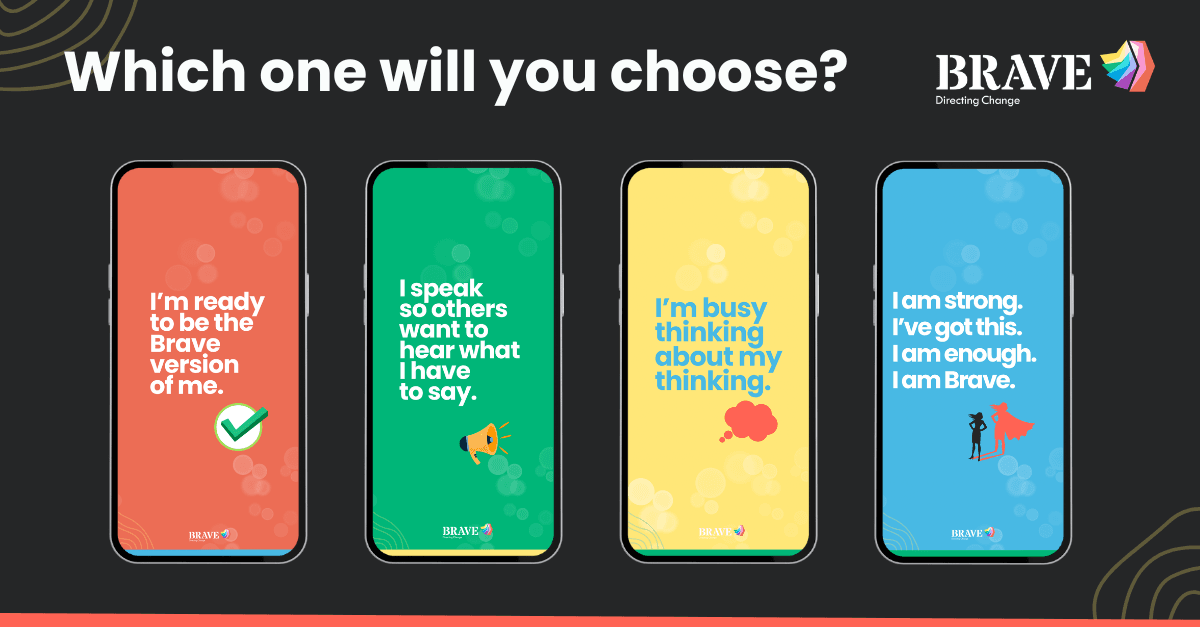
Have a ‘nudge’ on us.

Do you need a nudge? 👈🏼

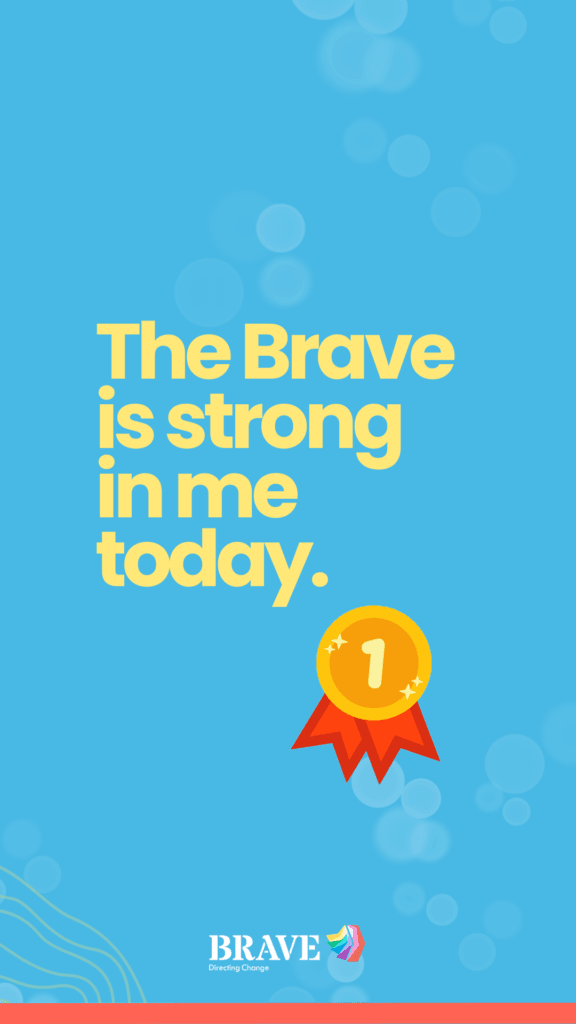
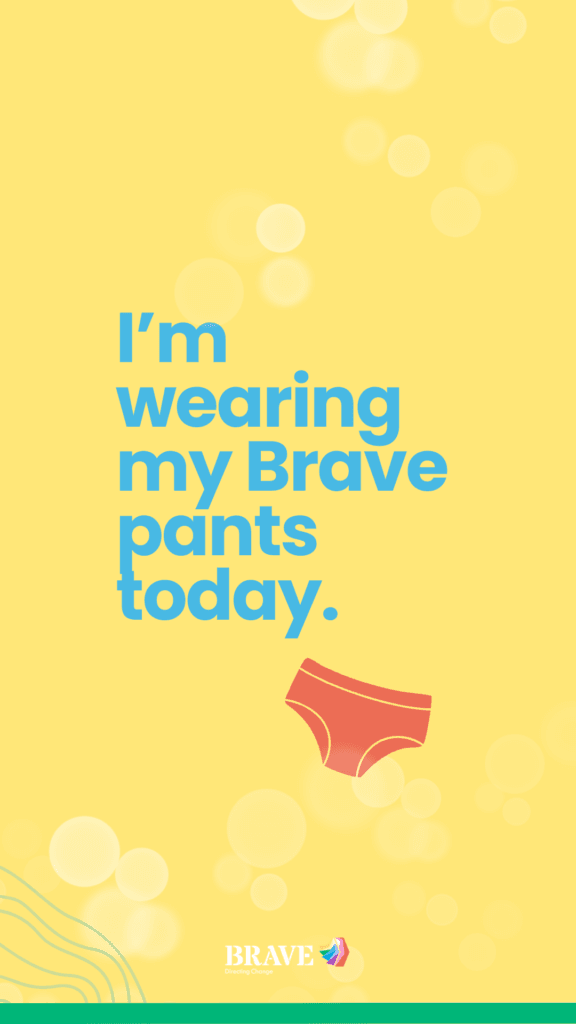
Using your phone 📱 wallpaper as a subtle cue to gently guide your behaviour is a classic, practical application of ‘nudge theory’. ☑️

Nudge theory is the idea 💡 of subtly shaping people’s environments to encourage them to make better choices, using gentle suggestions and psychology rather than strict rules.

Because we all glance at our lock and home screens dozens of times a day, they function as powerful visual primes for your subconscious, helping you stay focused 🎯 feel good 😊 and boost your confidence 💪

You can download We Are BRAVE Wallpapers for free. Long press and save and then use the image as a wallpaper using your phone settings.

#wearebrave #brave #bravenudges