Decision Making with AI.

Can AI help you make decisions? 🤔

We think it’s a BIG yes….but you need to know how and we can help. ✅

AI isn’t here to replace your judgement. It’s here to stretch it, stress‑test it, and speed it up. 🤖

  1. Get AI to Play a Persona
  2. Use AI as Your Researcher
  3. Ask AI to Scrutinise Your Thinking
  4. Run a Quick Scenario Simulation
  5. Ask AI to Summarise Your Options

The BRAVE Principle?
You bring judgement.
You bring the human element.
AI brings breadth, speed, and challenge.

Download the FREE Guide to get the full details. ⬇️

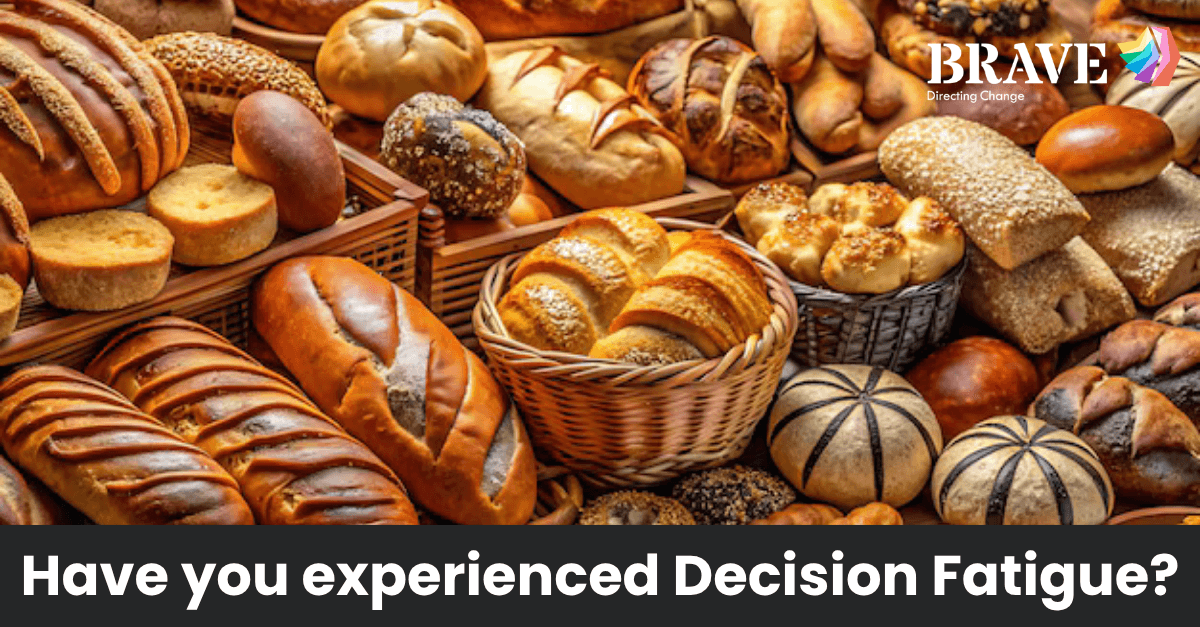
Have you experienced Decision Fatigue?

In the world we live and work in, the pace of change & challenge has never been faster. It’s becoming commonplace to experience a block when it comes to making key decisions. 🚫

What is it?

Decision fatigue is described as mental and emotional exhaustion thsat happens when you’re forced to make too many decisions (particulalrly high stakes ones) in a row. Your brain treats every choice like a small task. Over time, these tasks add up and drain your mental energy. When that energy runs low, your ability to think clearly drops.

In real life this is when you are stood staring at the neverending shelves of bread in your supermarket or deli paralysed by the overwhelming levels of choice. We’ve been there. Damn you garlic focaccia.

Common Signs

  • Procrastination: You delay simple tasks because picking a path feels too hard.
  • Impulsivity: You make fast, careless choices just to finish the process.
  • Brain fog: You feel hazy, unfocused, or mentally slow.
  • Irritability: Small questions or requests make you angry or frustrated. 

Why It Happens

The human brain can suffer from choice overload. Yep, it’s as simple as it sounds. Having too many options for simple things, like what to eat, drink or wear. It often appears in high stakes work scenarios when someone is regularly and repeatedly having to make hard or important choices under heavy pressure. If this affects how someone then sleeps or rests it can become more intense and manifest into stress which lowers your brain power further.

How to Prevent It

  • Make big choices early: Decide important things in the morning when your mind is fresh.
  • Build routines: Wear similar clothes or eat similar meals to cut out minor choices.
  • Limit options: Restrict your choices to two or three items instead of looking at dozens.
  • Use a model: Use a decision making model to help you.

If you think we can help you with decision making then drop us a line, we’d love to help.

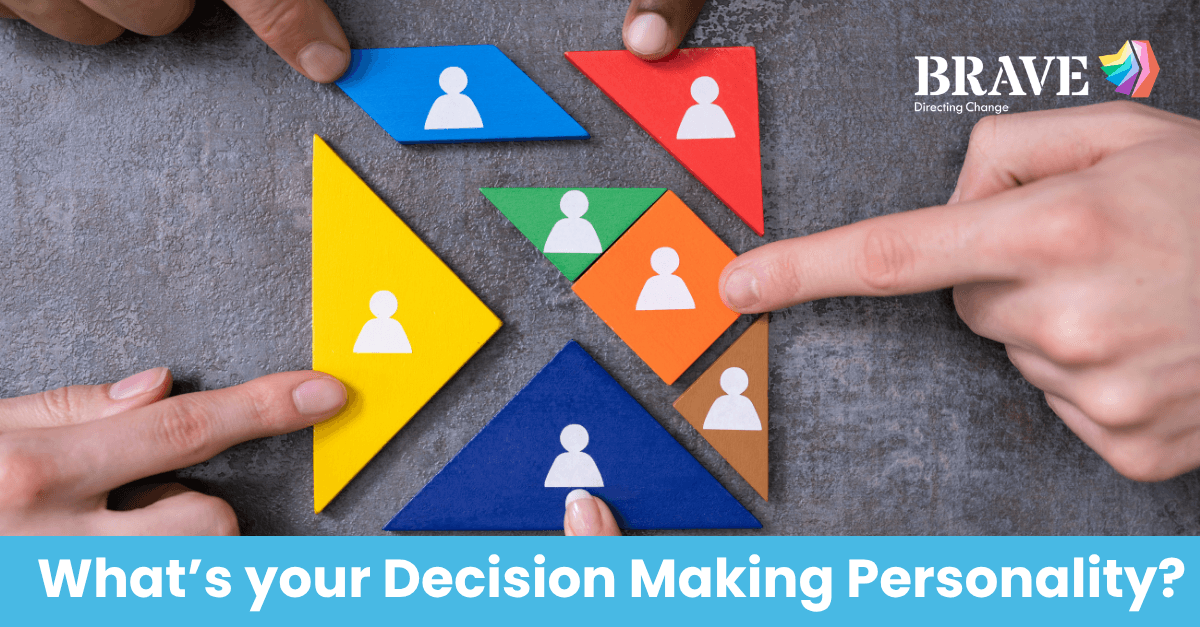
What’s Your Decision-Making Personality?

At We Are Brave we know decision-making sits at the heart of confidence, self-trust and personal growth.

Every day we make hundreds of decisions, from small choices about our routines to life-changing decisions about our careers, relationships and future goals. While we often focus on what decision to make, we rarely stop to consider how we make decisions in the first place.

Understanding your natural decision-making approach can be incredibly empowering. It helps you recognise your strengths, identify potential blind spots, and make choices with greater confidence and clarity.

At We Are Brave, we believe there is no single “right” way to decide. Instead, most people naturally lean towards one of four decision-making personalities. Which one sounds most like you?

Take a read and see which personality aligns with you the most, and downlaod the free One Page Guide to access Strengths & Challemges of each one.

The Investigator

Before making a decision, they want to explore every angle, gather facts and thoroughly assess the options available to them. They’re naturally curious and often excel at noticing details others overlook.

Investigators rarely rush. They prefer to feel informed and prepared before committing to a course of action. Remember that perfect information rarely exists. Sometimes confidence comes from taking action, not gathering more data.

The Connector

They naturally consider how decisions will affect those around them and often seek input from trusted friends, family members or colleagues before making important choices.

Connectors value collaboration and are often skilled at bringing people together and creating consensus. Listening to others is valuable, but your own voice deserves a seat at the table too.

The Visionary

They thrive on ideas, innovation and imagining what could be. Rather than focusing solely on today’s realities, they naturally think about future opportunities and the bigger picture.

When faced with a problem, they often generate creative, unconventional solutions that others may not immediately see. A brilliant idea only creates change when it’s acted upon. Pairing creativity with a clear plan can help bring your vision to life.

The Driver

Once they’ve gathered enough information, they’re ready to make a choice and move forward. They prefer momentum over endless deliberation and are often highly focused on outcomes and results.

Drivers are typically decisive, direct and confident in their approach. Slowing down occasionally to seek different viewpoints can strengthen an already decisive approach.

Why Understanding Your Style Matters

Most of us aren’t purely one personality type. We often show traits from multiple styles depending on the situation, the pressure we’re under, or the significance of the decision.

The real value comes from self-awareness.

When you understand your natural tendencies, you can recognise when they’re helping you and when they might be holding you back.

The bravest decisions aren’t always the fastest or the boldest. They’re the ones made with self-awareness, confidence and alignment with what matters most to you.

Because courage isn’t about making perfect decisions. It’s about trusting yourself to make them.

Download your FREE Guide here:
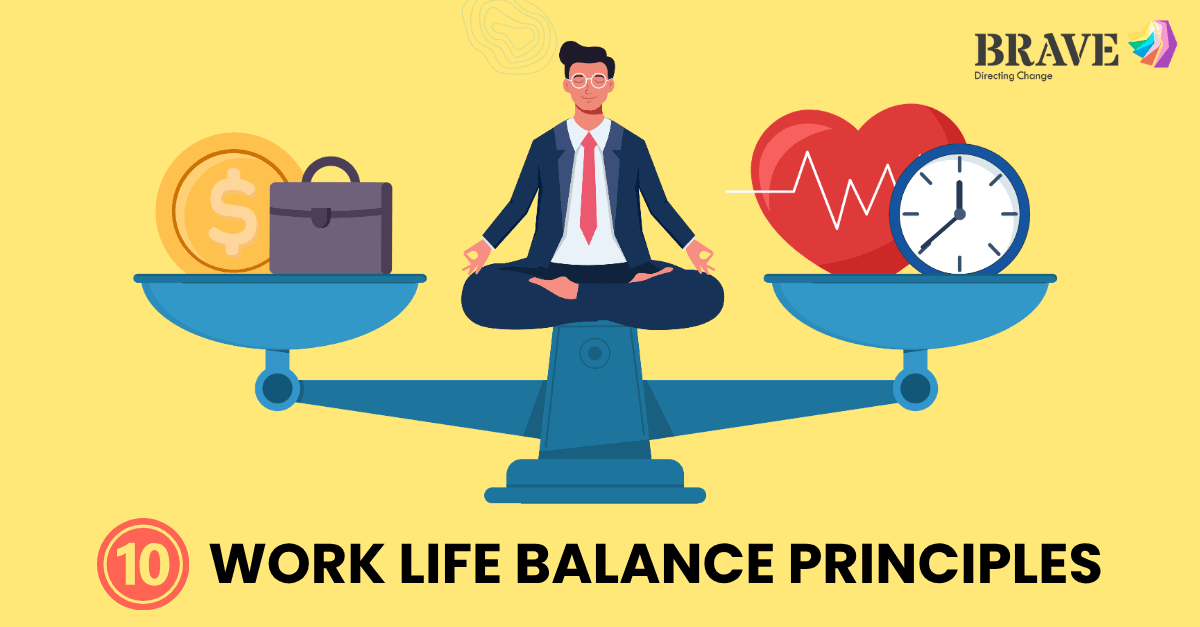
10 Work Life Balance Principles

When it comes to work life balance using simple principles to help you take control can reap you big rewards across your life. ✅

Take a look and see what you think. How many are you in control of? 🤔

If you’d like the high-res version then download a copy below.

Sara and Rhi. 

The AI Digital Fluency Model – The 4D’s.

We discovered an incredibly useful tool created by data scientists who helped to build a pretty well-known A.I model you might just have heard of it?

The A.I Digital Fluency model, sometimes called the 4D Model, helps people get the most out of A.I and highlights the leadership skills needed for the future as our reliance on A.I grows.

It teaches you brilliant habits for when you interact with AI.

We’ve created a We Are Brave Download and of course it’s totally free for you.

Download your HD copy here:

If you’d like to talk to us about this, or read more about AI on our dedicated page then click the link below. 👇 

AI & Human Judgement – BRAVE

You Get What You Measure

A BRAVE View. 

We think it’s safe to say most people agree that what gets measured, generally gets done. 

Simon Sinek takes it a step further in a recent article, and proposes that what we measure also shapes how people behave.

When you look at this through a BRAVE lens, the connection is obvious.

If we want people to Think, Speak, Disagree, and Decide bravely, we have to measure the behaviours that make those things possible. Because let’s face it, when organisations only measure output, people quietly stop doing the things that create great work.

If the scoreboard only shows deadlines, numbers, and deliverables, people optimise for deadlines, numbers, and deliverables.

They stop thinking about their thinking. They stop speaking up. They stop disagreeing constructively. They stop deciding with integrity.

Not because they don’t care, but because the system tells them that how they do that stuff just doesn’t matter.

A results only culture teaches people to avoid difficult conversations and learn to hide problems. They might play it safe, rush decision making or choose silence over honesty.

And that’s simply the opposite of what we’re trying to achieve at We Are BRAVE.

This is how we see it. 

You measure curiosity, not just completion.

If you want people to think bravely, leaders need to notice the good questions, reward early risk‑spotting and thoughtful reflection. Thinking becomes visible when leaders choose to look for it.

You measure contribution, not compliance. Speaking bravely shows up when leaders value people naming truths early and being brave enough to share clarity instead of staying quiet. When speaking is measured, people stop whispering in corridors and start contributing in meetings.

You measure healthy challenge, not harmony. Disagreement isn’t conflict, it’s really quality control. If leaders begin to measure constructive challenge, and seeing multiple perspectives along with encouraging respectful debate then their people will stop avoiding tension and start strengthening ideas.

You measure integrity, not speed or savings. Brave decisions are made when leaders value how the decision was made and whether values guided it. When they look for whether risks were considered, or if the decision stuck. Decision making becomes meaningful when it’s measured beyond “how fast”.

Our Final Thought

Simon Sinek teaches us that behaviour almost always follows measurement. BRAVE teaches you that your behaviour almost always shapes a culture.

And that’s how a culture shifts. One measured behaviour at a time. If you’d like to discuss this with us, or anything else, we’d love to talk. 

Reach out using the contact form below. 👇 

Simon’s article is here: https://simonsinek.com/stories/you-get-the-behavior-you-measure

Contact Us – BRAVE

How to (politely) say no.

How often do you actually say the word no? 🤔

For many people this is the ultimate test. Publicly (or privately) have to decline a request or interaction is really hard. 😱

People usually struggle to say no at work for a mix of psychological, social, and organisational reasons.

The three most common are below. Do you spot anything familiar?

Fear of disappointing others. 🥲
If I say no, someone will think I’m unhelpful, difficult, or not a team player.

Unclear role boundaries 🧱
If someone isn’t fully sure what is and isn’t their job, saying no feels risky.

Fear of future consequences. 🪜
If I say no now, will it affect my progression, reputation, or opportunities later?

    We’ve created a simple How to Say No Download, and of course, it’s completely free. 😉

    Download your HD copy today.

    Discovering Your Personal Agency.

    If you’ve ever had that moment where you think, “I wish things would just… change,” you’re not alone. Most people wait for circumstances to shift before they do. But here’s the quiet truth that sits underneath every meaningful transformation: change doesn’t start out there.

    Personal agency is the belief and practice that you can influence your own life. It’s the sense that your choices matter, your actions have weight, and you’re not just a passenger in your own story. It’s not about control. It’s about authorship.

    And in a world that feels increasingly unpredictable, agency isn’t just helpful. It’s grounding.

    Why do we think personal agency matters so much?

    1. It can turn overwhelm into direction

    When life feels chaotic, agency gives you a foothold. You stop asking, “Why is this happening to me?” and start asking, “What can I do next?” That shift alone changes everything.

    2. It helps build resilience

    People with strong agency don’t crumble when things get tough. They adapt. They choose their response. They stay connected to their own power, even when the situation isn’t ideal.

    3. It boosts confidence

    Confidence doesn’t come from knowing you’ll succeed. It comes from trusting you can act. Agency is that trust in motion.

    4. It helps unlock growth

    When you believe your actions matter, you try more things. You take more risks. You stretch. You learn. You evolve.

    5. It often strengthens relationships

    Agency isn’t selfish. It’s responsible. When you own your choices, you communicate more clearly, set healthier boundaries, and show up with more integrity.

    Start small, your personal agency grows through your actions, not theory. Pick one thing you can influence today and do it.

    Try to notice your language to yourself. Make the shift from “I can’t” to “I could,” from “I have to” to “I choose to.” Words shape reality.

    Ask better questions so instead of “Why is this happening?” try “What’s one thing I can do?” or “What’s the next right step?”

    Stick to your values. Agency is so much easier when your actions align with what matters to you. Values create your direction.

    Celebrate the influence you have. Every time you make a choice that moves you forward, even just a tiny one, be sure to acknowledge it. Your agency grows with each recognition.

    Let go of perfection, it simply doesn’t exist. Agency isn’t about making flawless decisions. It’s about intentional ones. Progress beats perfection every time.

    The BRAVE truth is this; personal agency is the foundation of every meaningful change. Whether you’re talking work, relationships, leadership or life. When you can find a way to reconnect with your agency, you stop waiting for permission. You stop outsourcing your power and start shaping your world instead of reacting to it.

    And the best part? There’s no excuse. You’re not born with it. You need to create and build it, and everyone can do it.

    If you think we can help you develop your agency, then get in touch. We’d love to hear from you.

    Stop Hiding Behind Your Keyboard

    Why your toughest conversations are better spoken.

    At We Are Brave we’re trying to help people see that disagreement doesn’t have to mean dislike, and that when you speak up and debate with purpose you improve the outcomes for all. It’s our ethos!

    But, in the real world, humans have built a world where disagreement is easy to avoid in person if you want to. No awkward pauses, no raised voices, just a screen and time to think. In 2026, many disagreements happen through messages, emails, or posts, rather than face-to-face.

    (Did someone say ‘keyboard warrior’?)

    That shift might feel like real progress to some. We can understand why, but the evidence suggests otherwise.

    Recent research finds that when disagreeing, speaking with someone versus using written communication makes them more likely to understand you. Burint Bevis and the team from Imperial College London and the University of California, Berkeley would argue that simply changing the conversation medium in which disagreement takes place can have a positve effect on its outcome.

    The medium matters more than we think

    Across a series of experiments involving more than 1,500 participants, researchers compared conversations between people who disagreed on political and social issues. Some spoke, others wrote.

    The pattern was consistent. People who spoke tended to:

    • report greater understanding
    • experience less conflict
    • come away with more favourable impressions of the other person
    • show more movement in their views

    Those who wrote generally saw weaker versions of these outcomes. The differences are not dramatic in every case, but they are consistent enough to matter.

    What speaking does differently

    One explanation seems to be something called conversational receptiveness, language that signals openness and a willingness to engage with another person’s point of view.

    People appear to use more of this kind of language when they speak. When we dleiver our Speak modules, this is one of the things we cover.

    That may be because conversation demands it. Tone, timing, even small hesitations can make it easier to signal interest or acknowledge the other side. Writing, by contrast, can become more controlled and more guarded.

    Interestingly, when people do use receptive language in writing, it appears to help. They just tend to do it less often.

    People still choose the wrong channel

    Despite this, most people say they would choose writing if they expected a disagreement. Only a small minority prefer speaking or video. Researchers suggest this may be because writing feels more manageable. It gives people space to think, edit, and avoid being put on the spot.

    That instinct makes sense. It just doesn’t seem to lead to better outcomes.

    What this means in practice

    The conversations in the study were fairly low stakes, often between strangers, with limited emotional intensity. That leaves open the question of whether the same pattern holds in more personal or heated situations. Even so, the direction is clear.

    If your goal is to be understood, and to understand someone else, speaking appears to give you a better chance than typing.

    The next time a conversation starts slipping into disagreement, it might feel natural to keep typing….but it might just be worth picking up the phone instead.

    If you think we can help you develop your speaking or disagreement skills, then get in touch. I’d love to hear from you.

    Credit

    If you’re interested in the full paper you can find that here: Spoken disagreement is more constructive than written disagreement | Nature Communications

    Are you Fight, Flight or Freeze?

    One of the most common questions we get asked is “how do I control my nerves” 😬 when presenting to others.

    We figured rather than than tell you, we’d show you 😉

    There are 3 Micro Learning Videos for you to watch to grab the knowledge.

    You can watch the series below 👇

    Learn about Fight

    Learn about Flight

    Learn about Freeze

    If you love learning in bite size videos then sign up to the BRAVE Newsletter to get free access to the entire back catalogue. 💻 🎥