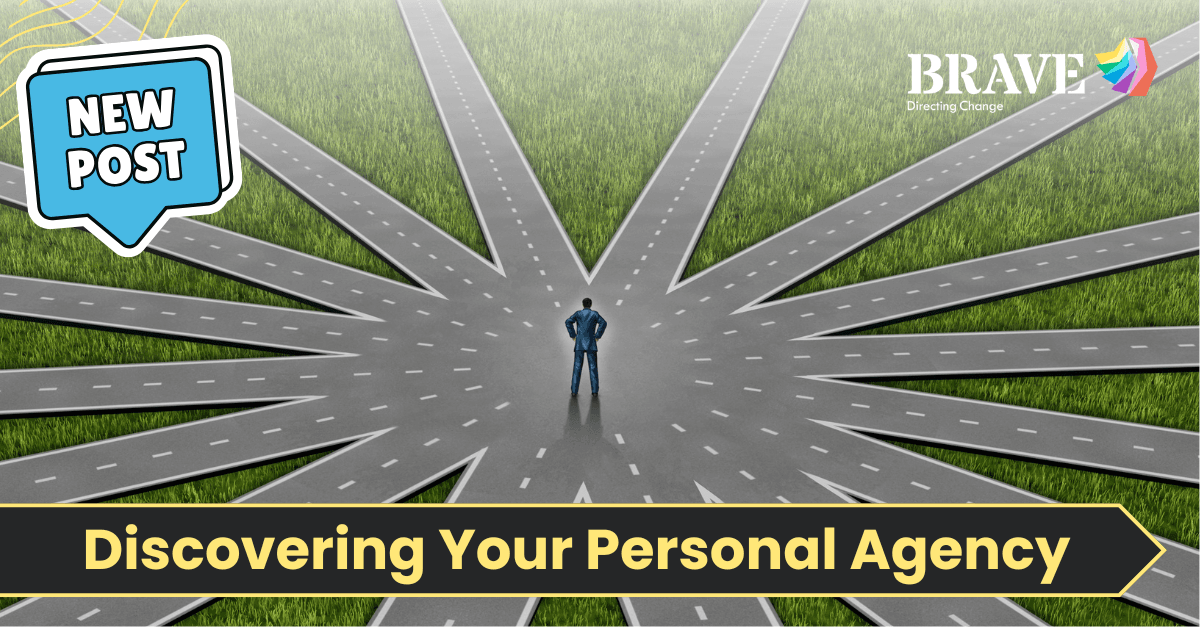
Discovering Your Personal Agency.

If you’ve ever had that moment where you think, “I wish things would just… change,” you’re not alone. Most people wait for circumstances to shift before they do. But here’s the quiet truth that sits underneath every meaningful transformation: change doesn’t start out there.

Personal agency is the belief and practice that you can influence your own life. It’s the sense that your choices matter, your actions have weight, and you’re not just a passenger in your own story. It’s not about control. It’s about authorship.

And in a world that feels increasingly unpredictable, agency isn’t just helpful. It’s grounding.

Why do we think personal agency matters so much?

1. It can turn overwhelm into direction

When life feels chaotic, agency gives you a foothold. You stop asking, “Why is this happening to me?” and start asking, “What can I do next?” That shift alone changes everything.

2. It helps build resilience

People with strong agency don’t crumble when things get tough. They adapt. They choose their response. They stay connected to their own power, even when the situation isn’t ideal.

3. It boosts confidence

Confidence doesn’t come from knowing you’ll succeed. It comes from trusting you can act. Agency is that trust in motion.

4. It helps unlock growth

When you believe your actions matter, you try more things. You take more risks. You stretch. You learn. You evolve.

5. It often strengthens relationships

Agency isn’t selfish. It’s responsible. When you own your choices, you communicate more clearly, set healthier boundaries, and show up with more integrity.

Start small, your personal agency grows through your actions, not theory. Pick one thing you can influence today and do it.

Try to notice your language to yourself. Make the shift from “I can’t” to “I could,” from “I have to” to “I choose to.” Words shape reality.

Ask better questions so instead of “Why is this happening?” try “What’s one thing I can do?” or “What’s the next right step?”

Stick to your values. Agency is so much easier when your actions align with what matters to you. Values create your direction.

Celebrate the influence you have. Every time you make a choice that moves you forward, even just a tiny one, be sure to acknowledge it. Your agency grows with each recognition.

Let go of perfection, it simply doesn’t exist. Agency isn’t about making flawless decisions. It’s about intentional ones. Progress beats perfection every time.

The BRAVE truth is this; personal agency is the foundation of every meaningful change. Whether you’re talking work, relationships, leadership or life. When you can find a way to reconnect with your agency, you stop waiting for permission. You stop outsourcing your power and start shaping your world instead of reacting to it.

And the best part? There’s no excuse. You’re not born with it. You need to create and build it, and everyone can do it.

If you think we can help you develop your agency, then get in touch. We’d love to hear from you.

Brave Leadership Resources

Leadership is a talent that always needs to be in constant development. ✅

We’ve compiled our very best Leadership Resources and placed them all on one page for easy access.

You’ll have access to Leadership Conversation Starters and a set of Leaders Lessons plus the super useful Leadership Styles Guide and much more.

Scroll down and take your pick of the free resources.

Stop Hiding Behind Your Keyboard

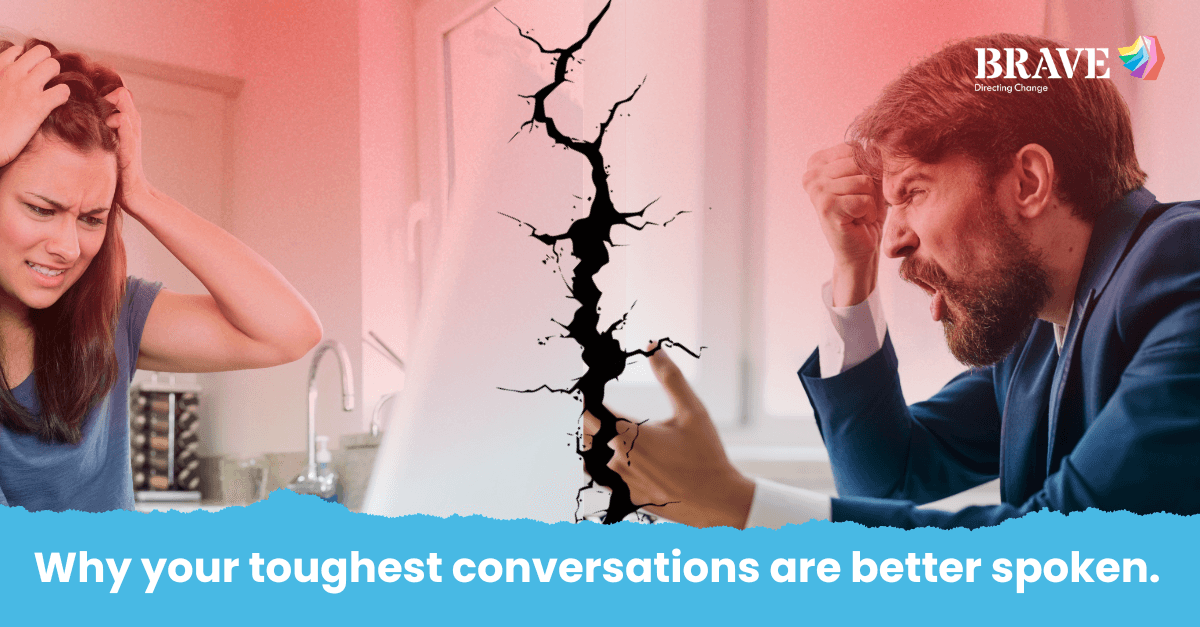
Why your toughest conversations are better spoken.

At We Are Brave we’re trying to help people see that disagreement doesn’t have to mean dislike, and that when you speak up and debate with purpose you improve the outcomes for all. It’s our ethos!

But, in the real world, humans have built a world where disagreement is easy to avoid in person if you want to. No awkward pauses, no raised voices, just a screen and time to think. In 2026, many disagreements happen through messages, emails, or posts, rather than face-to-face.

(Did someone say ‘keyboard warrior’?)

That shift might feel like real progress to some. We can understand why, but the evidence suggests otherwise.

Recent research finds that when disagreeing, speaking with someone versus using written communication makes them more likely to understand you. Burint Bevis and the team from Imperial College London and the University of California, Berkeley would argue that simply changing the conversation medium in which disagreement takes place can have a positve effect on its outcome.

The medium matters more than we think

Across a series of experiments involving more than 1,500 participants, researchers compared conversations between people who disagreed on political and social issues. Some spoke, others wrote.

The pattern was consistent. People who spoke tended to:

  • report greater understanding
  • experience less conflict
  • come away with more favourable impressions of the other person
  • show more movement in their views

Those who wrote generally saw weaker versions of these outcomes. The differences are not dramatic in every case, but they are consistent enough to matter.

What speaking does differently

One explanation seems to be something called conversational receptiveness, language that signals openness and a willingness to engage with another person’s point of view.

People appear to use more of this kind of language when they speak. When we dleiver our Speak modules, this is one of the things we cover.

That may be because conversation demands it. Tone, timing, even small hesitations can make it easier to signal interest or acknowledge the other side. Writing, by contrast, can become more controlled and more guarded.

Interestingly, when people do use receptive language in writing, it appears to help. They just tend to do it less often.

People still choose the wrong channel

Despite this, most people say they would choose writing if they expected a disagreement. Only a small minority prefer speaking or video. Researchers suggest this may be because writing feels more manageable. It gives people space to think, edit, and avoid being put on the spot.

That instinct makes sense. It just doesn’t seem to lead to better outcomes.

What this means in practice

The conversations in the study were fairly low stakes, often between strangers, with limited emotional intensity. That leaves open the question of whether the same pattern holds in more personal or heated situations. Even so, the direction is clear.

If your goal is to be understood, and to understand someone else, speaking appears to give you a better chance than typing.

The next time a conversation starts slipping into disagreement, it might feel natural to keep typing….but it might just be worth picking up the phone instead.

If you think we can help you develop your speaking or disagreement skills, then get in touch. I’d love to hear from you.

Credit

If you’re interested in the full paper you can find that here: Spoken disagreement is more constructive than written disagreement | Nature Communications

How to Display Trust as a Leader

One thing that will always be on the leadership checklist is Trust. 🛡️

No leader can take a team on any journey without first developing trust. 👊🏼

How to Develop Trust as a Leader is the next free download and its available here:

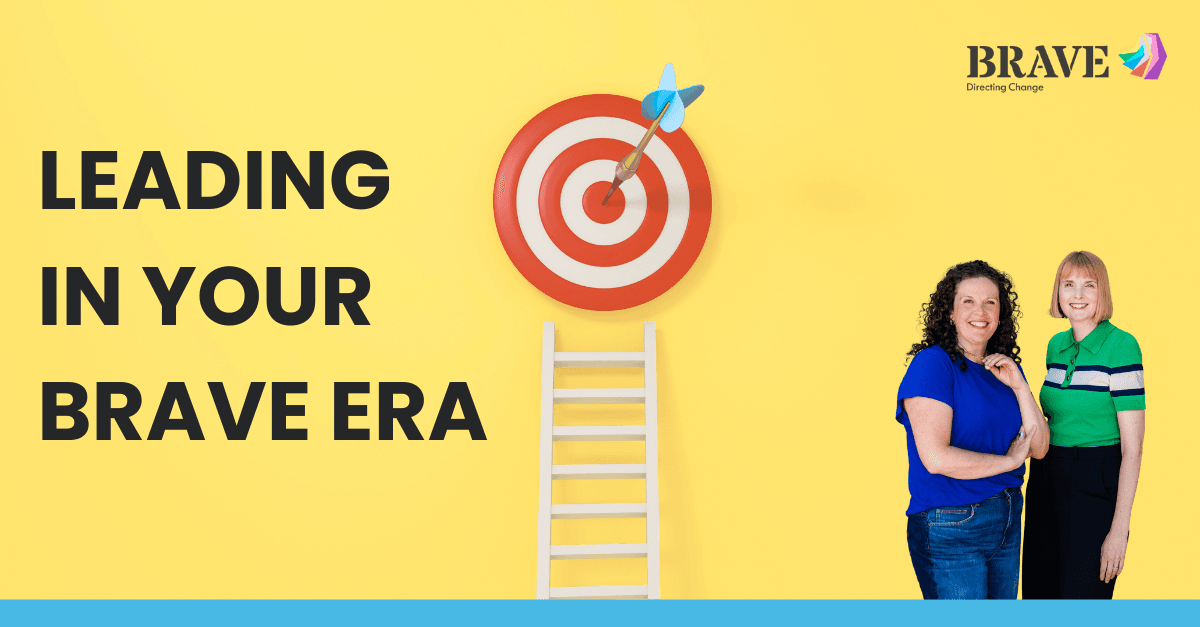
Leading in your Brave Era

In today’s environment, leadership can feel like a constant balancing act. Uncertainty isn’t something that comes and goes anymore, it’s just part of the job. Market pressures shift, operational challenges show up unannounced, and the “right” decision is rarely obvious straight away.

In those moments, it’s easy to lean towards caution. To keep things steady, minimise risk, and not push too hard. But that’s not what teams need from us. They don’t just need leaders who protect what’s already there, they need leaders who are willing to step forward, even when things aren’t fully clear.

Being brave at work isn’t about getting rid of fear altogether. It’s about recognising it, and choosing to act anyway, with purpose.

At its core, Brave leadership shows up through four behaviours: Think, Speak, Disagree, and Decide. Together, they make courage something we practise every day, not just something we reach for in a crisis.

As leaders navigate these times, we know that embracing your ‘Brave Era’ can help you lead with impact.


Courage starts with clarity. If we’re asking people to move into uncertainty, there needs to be a reason that feels bigger than the risk.

That means looking ahead properly, spotting challenges early, and choosing how we frame them. Not as threats to manage, but as opportunities to do something meaningful.

In practice, it can be as simple as shifting the question. It’s thinking about your thinking. Instead of reacting to a new competitor or changing expectations, we ask: What does this allow us to do differently?

When people understand the purpose behind the challenge, they approach it differently. Thinking well sets everything else up.


Preparation isn’t just about having a plan, it’s about talking things through.

Leaders who are open about risks, possibilities, and unknowns tend to build teams that are far more confident when those situations actually happen. It takes away some of the fear and replaces it with shared understanding.

That might look like walking through “what if” scenarios together:

  • What if performance drops quickly?
  • What if something goes wrong publicly?
  • What if we have to pivot faster than expected?

When those conversations happen early, people don’t freeze under pressure, they move. Speaking up openly and speaking so that people want to listen to you builds both your readiness and their trust.


Brave cultures aren’t built on agreement, they’re built on honest challenge.

It’s easy to confuse alignment with silence. But just because nobody is pushing back doesn’t mean the best thinking has been done, it often just means people don’t feel comfortable saying what they really think. We call this corporate theatre.

Creating space for disagreement matters. It sharpens ideas, tests assumptions, and leads to better decisions overall. Remembering that disagreemtn does not mean dislke, often frees you from the reasons you might normsally avoid it.

That doesn’t mean encouraging conflict for the sake of it. It means deliberately asking for different perspectives, especially when things are complex or uncomfortable. And actually listening when you get them.

When people feel able to challenge constructively, courage becomes something shared, not something carried alone.


At some point, thinking, speaking, and debating have to turn into action.

Courage shows up in the decision itself, not because it’s guaranteed to work, but because it moves things forward.

And in most cases, brave decisions aren’t big dramatic moments. They’re smaller, deliberate steps. Trying something. Testing it. Learning quickly and adjusting as you go. It’s making well formed, well informed choices.

Momentum comes from movement. Waiting for perfect certainty usually just slows things down.

Decisive leaders understand that progress matters more than perfection.


Steady Leadership Under Pressure

One of the clearest signs of brave leadership is composure.

In high-pressure moments, teams take their cue from the leader. If we panic, that spreads fast. If we stay steady, it gives people space to think and stay focused.

That kind of steadiness doesn’t just happen, it’s built over time. Through small habits that help you reset and keep perspective, even when things get busy or challenging.

A brave leader doesn’t remove the pressure. But they make it a lot more manageable for everyone else.


Bringing It Together

Bravery at work isn’t about big gestures or standout moments. It’s about how we show up consistently, how we think, how we speak, how we handle disagreement, and how we make decisions.

  • We think with intent
  • We speak openly and passionately
  • We disagree constructively and debate with purpose
  • We decide with courage and conviction

And in doing that, we create an environment where others feel able to do the same.

Playing safe might protect things for a while, but it doesn’t move much forward.

Real progress comes from those willing to step into uncertainty and lead anyway.

And that’s what being brave looks like.

If you think we can help you develop your own, or your teams leadership skills, then get in touch. We’d love to hear from you.