In today’s world, as our focus on what a true leader looks like continues to shift, one thing is for sure. They need to be emotionally intelligent. But why?
Well, those leaders who have emotional intelligence are generally easily able to build relationships, have personal integrity and excellent communication skills, along with the power to be inspiring to those around them. It’s surely a no brainer.
Who doesn’t want that in their leadership team?
Emotionally intelligent leaders are usually able to rally the troops and encourage more efficient and productive teams, regardless of pace, economic upheavals and periods of change and growth.
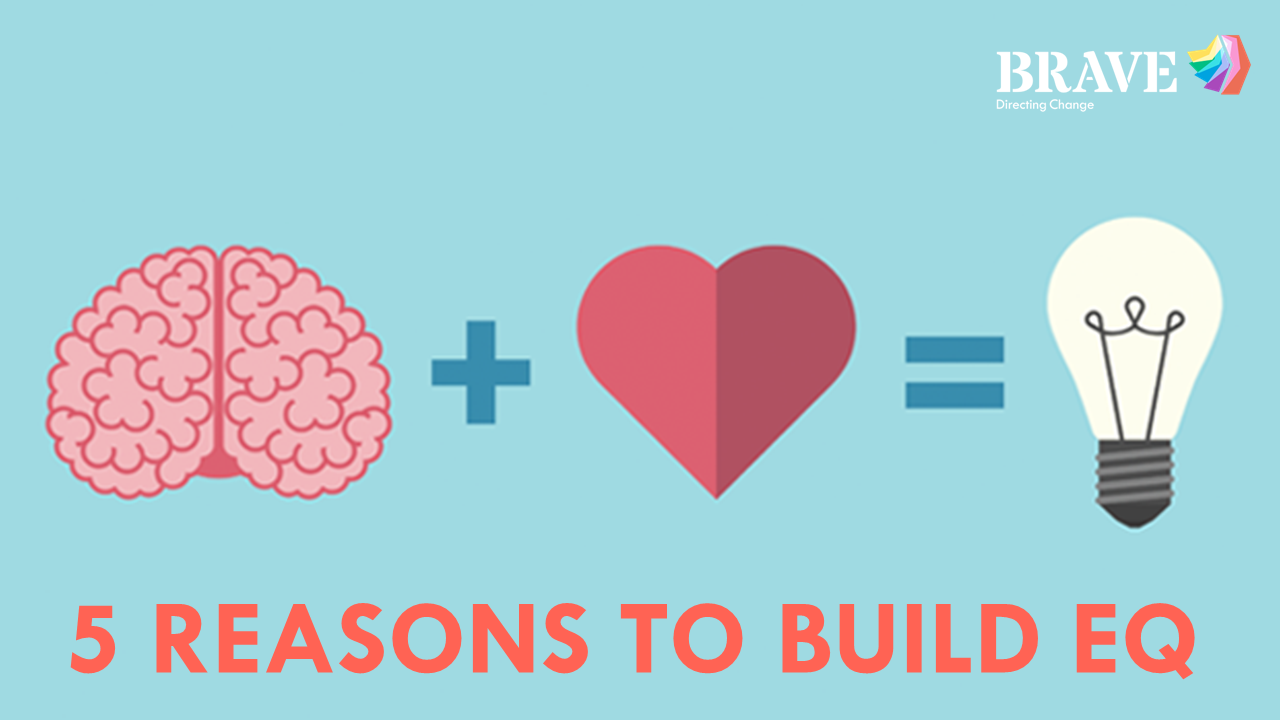
Here’s 5 reasons for anyone to build their emotional intelligence
Improved Relationships: Emotional intelligence helps individuals to better understand their own emotions and those of others. As a result, it can lead to stronger and more meaningful relationships with friends, family, and colleagues.
Effective Communication: People with high emotional intelligence are better able to communicate their thoughts and feelings effectively. They can express themselves in a way that is clear, concise, and respectful, which can prevent misunderstandings and conflicts.
Better Decision-Making: Emotional intelligence allows individuals to make better decisions based on their emotions and intuition, in addition to logic and reason. This can lead to more thoughtful and effective decision-making, especially in complex or ambiguous situations. Our DECIDE modules help you do this.
Increased Resilience: Emotional intelligence helps individuals to cope with stress, setbacks, and adversity. They are better able to regulate their emotions and maintain a positive outlook, even in difficult circumstances.
Professional Success: Emotional intelligence is highly valued in the workplace, as it is often associated with effective leadership, teamwork, and communication skills. People with high emotional intelligence are more likely to succeed in their careers and be seen as valuable assets to their organisations
Talk to us if you’d welcome our help in growing this skill in your teams.
When you become ‘consciously’ aware of something you will notice it and realise it’s happening: this is the definition of a conscious thought.
In our SPEAK programme we share principles to help guide you to success. One of these is Think Consciously, Do It On Purpose.
Here’s a great example of thinking consciously. As a child, when you learn something new like how to ride a bike, you become consciously aware of the process and engage with it. Every time you topple over, scuff the front of your trainers, lose control of the handlebars or fall off and graze your knee you simply get back up and keep going. Why?
Because the thought of being able to gain your freedom, being with your friends on their bikes, cycling with the wind rushing through your hair is so compelling that you persevere through every wobble or fall, you get back up and have another go. You persevere because the outcome will feel great.
Before you know it you are a bike rider, and you hop on without a second thought, free to ride anywhere you like. You build your skills; you go faster and you test your limits.
Skip forward to the future and even if you haven’t ridden a bike for years you can jump on and you suddenly experience an automatic thought process that says ‘I can do this, its familiar, I can ride a bike’. Your conscious thoughts back then, as a child that engaged in learning a new skill, gave the future you a helpful habit. This skill became so ingrained you’re now on full auto-pilot. You don’t need to think about how you do it, you just do it.
Now it’s time to start that journey and build another habit. This time, with your thinking.
Our programmes help you learn to understand the importance of being aware of your thinking and why when you think consciously and do it on purpose, you’ll get far closer to the results you need. Imagine the communication and decision-making powers you can implement when you know you’re thinking clearly and with intention.
By using structure and tools, we can help you to challenge your old way of approaching topics and avoid the pitfalls such as group-think and bias. It’s those pitfalls that keep us stuck or at worst, lead us to faulty decision-making. Unlocking your thinking will help you unlock innovation.
When you think differently, new ideas and solutions can take shape.
The great news is we are all capable of doing this. How do we know that? Because it’s the ability to think differently that took you from riding your bike with stabilisers to the moment when you realise you can let go of the handle-bars and shout “look, no hands!”.
What we do know is that learning to spot and be aware of your thoughts requires some attention and discipline but in any situation it will help you to think better. With the same determination you applied as a child eventually thinking consciously and on purpose will become your powerful default setting.
Talk to us to learn more about the 8 principles that are embedded into our BRAVE programme
Healthy disagreement is an important part of any work or personal relationship. And yet, it’s much rarer than you think.
Disagreement often has negative connotations but in fact it’s entirely natural for people to have different perspectives and opinions, and the ability to disagree well is key to resolving conflicts and finding common ground.
One of the most important principles of healthy disagreement is our principle of ‘debating the idea, not the person’. When we engage in a discussion or debate it’s important to focus on the idea being presented rather than attacking or criticising the person presenting them. It’s important to be able to separate the two, to reach the best decision or outcome.
‘Debate the idea, not the person sharing it’
Instead, we should focus on the merits of the debate itself. This means being curious and listening carefully to what the other person is saying – not something that’s always easy. Start with asking questions to clarify & understand their position first, then present your perspective clearly and calmly. Even if we don’t agree with someone else’s position, we can still respect them as a person and engage in a productive disagreement!
Another important aspect of healthy disagreement is the ability to recognise and address our own biases and assumptions.
We all have our own experiences, beliefs and values that shape how we see the world. It’s important to be aware of these biases and to own how they show up in any disagreement. By actively engaging with different perspectives and viewpoints we broaden our understanding of the world.
Finally, disagreeing well is about being willing to look for and find common ground. Broadening our understanding of a situation may mean that whilst we don’t always fully agree with the other person we can find ways to work together and find solutions that meet everyone’s needs. The very act of engaging with healthy disagreement brings clarity to where we agree and where we may need to work harder to find a middle ground.
That clarity creates an opportunity for progress and all progress begins with a BRAVE decision.
You can learn more about BRAVE, our principles and how we can help healthy disagreement prosper in your business by getting in touch today.
We thought we’d jump on the Artificial Intelligence bandwagon and see what we could learn. Our guest blog writer is none other than Chat GTP4 themselves.
We asked them to tell us how they could help learners of the future. This is what they told us (and it took them less than 20 seconds).
Hey ChatGTP4, tell me how AI like you can help future learners?
As an AI language model, I can help learners of the future in a variety of ways. Here are a few examples:
Answering questions: I can answer questions on a wide range of topics, from history to science to literature. Learners can ask me questions to clarify their understanding of a concept, or to learn something new.
Providing personalized learning experiences: With the help of machine learning, I can understand a learner’s strengths and weaknesses, and provide personalized learning experiences to help them improve.
Language learning: I can help learners practice their language skills by providing real-time feedback on their grammar, vocabulary, and pronunciation.
Creating educational content: I can generate educational content, such as quizzes, flashcards, and study guides, to help learners master a topic.
Recommending learning resources: I can recommend books, articles, videos, and other learning resources based on a learner’s interests and level of knowledge.
Overall, I can help learners of the future access knowledge and learn in new and innovative ways.
It’s reported to be one of the most powerful self-improvement activities you can do, and yet for many, it’s still not on their radar. It’s a simple one. Journaling.
Even though this practice it’s been around for hundreds (well, actually, thousands of years), journaling is currently having it’s celebrity moment.
In fairness, journaling isn’t a new thing or a fad, and countless studies have shown that if done regularly it can help you access a whole host of benefits for your emotional, and physical self.
So, what is journaling?
In short, journaling is simply you keeping a written account of your experiences, feelings and thoughts as you go through your daily life. What we like about this practice is that there’s no perfect way to do it. Every person who journals does it their way, and if it’s right for them, then it’s working.
“No rules. No trends. Just journal your way.”
If we peeked inside a few journals (which of course is not the done thing!) we’d see so many different versions. It could look like a to-do list, or a quote, or even something you did that day that brought you or someone else joy. You get the point. It’s personal. To you.
They key here is to develop this habit until it’s a part of every day and then you can reap the benefits helping you to spot patterns, trends & insights and track your emotions.
The benefits
There are many benefits of journaling so we’re just going to focus on four to get you started.
Improves mental well-being by being able to spot insights and patterns
Helps you set goals and keep a record of your progress and achievements
Can help you overcome challenging situations by recording thoughts and feelings and allowing time to reflect
Gives you a place to record things that are important to you, whether it’s gratitude, feelings, or positive emotions
At We Are BRAVE we use our own journals which are designed around the BRAVE principles. This allows the user to reap the benefits or journaling with a nod towards keeping the BRAVE methodology alive at the same time. We help by including some insightful questions to prompt reflection and the capture of key thoughts.
So, will you bite the bullet and begin to journal?
If you, or your team are struggling with tough workloads, never-ending to-do lists and the beginning of the dreaded burn out then we might have a (micro) solution for you. Try a Micro-Break.
When you hear about resilience, most content and advice will suggest taking regular breaks, but has anyone clarified how long a break needs to be?
Clearly a fortnight in the Maldives would most likely be the best solution, but being a little more practical we were really interested in some recent research by a University in Romania we came across.
‘Romanian researchers looked at the effect and efficiency of microbreaks on 2,000 people
The study has provoked some interesting discussions, mainly because what they found was that taking short microbreaks, as short as ten minutes, during a working day could boost team wellbeing and prevent burnout.
So, what are microbreaks?
What exactly is a microbreak? We were not sure either but according to this interesting research, it’s some dedicated time away from the task you are working on, that lasts ten minutes (or less). One thing the study did find, was that “the longer the break that was taken, the better the performance of the individual”.
10 Micro minutes, dedicated to time out, can have a BIG impact
While the research points at the importance of taking these micro-breaks throughout the day, separate stats show a worrying trend, that some employees just don’t take any breaks at all in an attempt to power through and just get their work done.
In fact, a study back in 2019 from Quantum Workplace said that 22% of team said they took no breaks at all (you’ll be pleased to know they did at least take lunch and toilet breaks!)
A powerful snippet of data from the study in Romania showed that those microbreaks we talked about are great for a boost to your energy levels and brilliant for batting away tiredness. They even showed that they can boost performance, mainly when the task the person was doing was repetitive, or alternatively, a creative one.
OK, how do we get the best from a Micro Break?
We’ve found that when you need a break, and need re-energise, for a performance boost, there are a few things you can try.
Move your body – try a walk round the garden or round the block.
Read a chapter of a book to break the focus on your screen
Power nap (set an alarm!)
Make a drink
Eat a snack
Meditate
Listen to music
Play with a pet
Doodle, draw or sketch
Crosswords or puzzles
Which of these do you think you or your team could try today?
Love this blog post?
Share it with the team and use it as a discussion point at your next team meeting!
Every company talks about Equality, Diversity and Inclusion, it’s come a long way and is finally an important part of most companies values, missions and visions.
“We’re working on this internally at We Are Brave and these are some of the approaches we’ve had to learn and unlearn ourselves. It’s an ongoing process of learning.”
One thing we’d love to hear more about in company welcome packs and inductions is how to become a great ally. To any group of people that might be excluded in some way.
We think learning about how you can use your own power to help others, by being an ally when someone needs it most is a skill that all businesses should focus on.
What is an ally?
An ally is someone who supports people who are in a minority group or who are discriminated against, even though they may not belong to that group themselves.
As businesses grow, so does the width and breadth of the diversity of its people (hopefully!)
We think that starting to think about allies and how to develop them is such a positive step to help all your teams feel safe, to encourage recruitment and retention and ultimately help your business be a great place to work.
Business leaders of all levels can help people to develop their skills and compassion by helping them to see what it takes to become a strong ally and help create positive change. We think the below tips can help a business to create a team of powerful allies across your people.
Provide the best education.
By helping your people to learn, (or maybe even to unlearn) helps them to open their minds and discover topics which will help them develop compassion and get a deeper understanding of what goes on in the world around them.
Provide access to books, podcasts & TED Talks. Encourage working groups and focus sessions. Create Networks and help people to immerse themselves in stories of people who have different backgrounds and lived experiences than they do.
Remember one size does not fit all.
It is easy to assume that we know what people want. I can fix that! Let’s create this!
Woah. Stop. Let’s just slow it down a little and what one person, or group needs from a supportive ally can be wildly different from another.
Asking, listening, summarising and idea creation sessions is what you need.
There is not a downloadable module, there’s no SCORM package to share. It takes time to create something that’s as unique as the people in your business. Let them play a main character role, let them lead and let them share with you what they want.
Create a listening superpower.
Being an ally means you must be able to listen. Really listen. With intent to understand and feel empathy for the experiences and stories you will hear.
Teaching this skill, and making it a superpower will reap rewards across the whole business, in every area, so a Win-Win all round. We deliver engaging and powerful communication and presentation programmes, which always include listening content in a variety of formats to match your needs.
Don’t put people into boxes.
The human race is a rich and diverse one, comprised of billions of people each with their own unique set of experiences that makes them who they are. Understanding this is extremely important for encouraging effective allyship, and can also provide a big boost for your company culture too.
It’s not an allies role to put people into boxes that define them just so it’s easier to help them. The ally should be helping them to get out of the boxes someone else has already put them in.
Most people don’t ‘identify’ as just one thing, and that’s how it should be because we are not defined by one thing, whether it be a different ability, a sexual preference, a neurodiversity, a skin colour or even a nationality. We are all made up of hundreds of experiences that shape us into who we are and each individual is incredibly complex. That requires understanding and tolerance.
Spot your own privilege benefits package.
Using the word “privilege” can sometimes be shocking to others, but it is essential to spot the privileges people have in order to deliver as an ally for others.
Privilege doesn’t mean that you haven’t worked hard, or that you have just had an easy life. It does mean that you had power that you didn’t even know you had.
Every person has experienced some form of privilege, whether that is being able-bodied, or having a robust education or even that your brain just works in a more typical way than others.
Your privilege could be described as the invisible benefits package you get as you move through life.
Everyone’s is different, and spotting them and identifying how they helped you and how the lack of them disadvantaged someone else helps you to become a better ally.
At We Ae BRAVE we pride ourselves on being listeners that truly listen and always using our rebellious skills to help others.
We know just by talking about this topic will help it get into conversations where it might not usually appear and that’s a brilliant start.
If you want to talk to us about helping you tackle your business needs then get in touch and start the conversation.
So, first things first, what the hell is a heuristic?
A heuristic is a mental shortcut most commonly used to help us simplify problems and avoid cognitive overload.
Heuristics are an important part of how the human brain is wired, and how it’s evolved, which in turn allows people to quickly reach reasonable decisions or solutions to complex problems.
These mental shortcuts sound amazing right? An easy way to use what you already know to help you work faster? They can be really helpful, but as with many things, there are risks.
Heuristics can often be super helpful for you by:
Helps you get to a conclusion faster
Reduces the mental strain needed to make decisions
Helps you with complex problem-solving
Turns complex questions into simple ones
However, heuristics can also lead to hidden cognitive biases.
As an example, think about the availability heuristic. You’ll be more likely to make a decision based on information that pops into your mind quickly because you have recently been looking at something similar.
Imagine you are reading articles on a regular basis about hostile managers and the damage they cause. This means that your availability heuristic will more easily help you identify this trait in managers at work because the heuristic is helping you get from A to B too fast.
Because of this, it’s important to understand what heuristics you use. Those heuristics could impact your daily decision-making process.
Here’s some of the most commonly used heuristics:
Affect
This is all about how people react to different stimulus and how this affects decision making. It could be any positive or negative feeling they experience at a particular moment and in a specific situation.
Anchoring
In this heuristic people tend to make their judgment based solely on the very first pieces of information they get, often called an “anchor”. Unfortunately the decision is usually made quickly so it may be inaccurate. Impulsive decision-makers forget or ignore other facts, making poorer choices.
Availability
This one we already mentioned. It’s due to our search to reach the best conclusions means we look to the sources that are the most readily available ones.
Representativeness
This makes people evaluate the likelihood of a solution or conclusion to a situation based on a similar past event that acts as representative data. It, thus, provides a reasonable probability of selecting the most effective alternative under uncertainty. You’re simply judging it based on the closest experience you have experienced.
Once you know what these are, and the ones you use the most, you can pause and analyse the effect they are having on your decision-making. This takes some effort because our heuristics feel very comfortable to us. They feel ‘right’ and it can be hard to challenge them.
A way to challenge?
After making a decision, especially a quick one, try to take a step back and consider what other possibilities existed that you didn’t choose. If you had chosen one of them, would the outcome have been different? This helps you internally calibrate if your heuristics are helping you make better decisions (or not)
Making BRAVE decisions
When you work with us we share our BRAVE principles to help you make your decisions in a well-formed and well informed style.
At We Are BRAVE, bear in mind, (pun intended) that we all are proud learning geeks, so when we think Goldilocks, we imagine something very different to most people.
We think about The Zone of Proximal Development. Yep. Really. We know it sounds like something in a Marvel movie.
Learning happens best in the zone of proximal development. This has been defined as the place where learning is still challenging enough to be interesting, but not too challenging that it becomes overwhelming. It’s within this strangely named zone that the really good learning occurs the most.
Most humans are a little bit like Goldilocks. They don’t want their porridge too hot or too cold.
What we’re really looking for, is for our porridge to be ‘just right’.
This leads us to the hook. Just right is also how most people like their learning and development.
Studies have shown that when learning or problem solving begins, our clever computer like brains quickly make a judgement call on what’s about to happen. Either, this is going to be too hard – I should abort, or this is going to be easy – I might get bored, therefore it’s time to check out.
At We Are BRAVE we make sure that our learning hits the ‘zone’ and helps the learner say ‘this is pretty interesting, and feels a little challenging, but I’m curious to know more’
Whether it’s our range of development programmes, our flagship BRAVE product or one of the many other solutions we both develop and deliver for our clients, you can be sure that we’ve applied the Goldilocks Test to make sure your experience is one you won’t forget.
What we can’t promise you is a bowl of porridge. Or 3 bears.
If you’d like to learn more about what we do, and how we can help you then get in touch today to start the conversation.
Now, before we start…don’t judge me but I have realised how much I miss attending conferences!
I was invited to attend #FuelX as the guest of the speaker and panel expert Robin Erickson. The event was hosted by Fuel50, a purpose-driven and progressive talent platform founded by Anna Fulton.
All things talent, engagement, learning and retention were discussed and in particular how current challenges could be addressed with more forward-thinking ideas and practical solutions. We were treated to case studies from giant corporates such as Johnson & Johnson to the world-changing United Nations Development Programme (UNDP). Who, as a side-note, have an internal learning & HR team of just three people. Three!
I’ve distilled what I heard and what I found insightful in this article. I will say up front, I was really impressed with how each case study showed how they had shifted not only the approach to talent & learning but also their culture and mindset by engaging a purpose-driven platform (and no, this is not a #ad for Fuel50!).
The key discussion areas of the day
Talent: great resignation, attracting & retaining, encouraging & growing the right peole AND the right careers
Skills: what do employees, what do organisations need and how do you get those two things aligned
Culture, culture, culture: organisations can make or break any of the above if the culture works in direct opposition to progress. Bias-breaking culture is what’s needed
Here are my top take-aways:
Talent: gaining it, retaining it, inspiring it
Robin Erickson spoke brilliantly about an organisational ‘talent mindset’ and about how you may be unaware of how your systems ‘filter’ talent before it even gets to you. For example, do you know for certain how any talent recruitment process (internal or external) filters for education and gaps in employments?
She challenged the room to be conscious and deliberate with thinking about your talent pool and challenging mind-sets around the more traditional CV expectations. It is limiting to think about the best candidate being the most educated. What is wrong with someone taking an employment break?
Our focus over the past few years on well-being, breaking bias and focussing on the individual means organisations (and their processes) need to shift to reflect this.
Ask yourself these questions:
What comes to mind when you think of the talent you want to attract?
Who are you ignoring based on out-dated modes of thinking?
How is your platform & process supporting or hindering the scope of the talent pool you can accesss?
Robin gave an inspirational example of how the formerly incarcerated have been given work-opportunities in the US (Robin is from Chicago) and have proven over and over how their attitude and motivation often outstrips those from other traditional routes.
Finally and most importantly, think about your bias-driven language when you want to attract (and retain) people. How well are you speaking to your audience or is it also limiting your reach?
Skills – the ones you want to acquire, retire and inspire
(that phrase is unashamedly stolen from Nick Holmes @ Fishawack Health)
From the different case studies and the panel-expert discussions one theme came through loud and clear: we need robot-proof skills! Which skills do people want to grow (acquire), recognise can be left behind (retire) and are not even aware of yet (inspire)
Once those are defined, how do people get hold of the skills and shout about them to enable their career development?
This was an interesting discussion: getting an organisation to shift from experience-led (eg: roles) career development to skills-led career development. That’s quite an organisational mind-set shift but no different or less important than the shift needed for acquiring or retaining talent, as mentioned above.
The shift is to no longer place absolute priority on ‘have you done the JOB’ and to move to ‘have you got the transferrable SKILLS?’. There is always the argument for technically specific role experience (think doctors, scientific roles) but that argument is too often used across other parts of an organisation where it’s less necessary.
Again, this means a shift in organisational mind-set eg: culture. I’m coming to that one next.
What are those all important robot-proof skills that will help growth, career development and organisational innovation. This is not a definitive list but the themes that were mentioned more than three times:
Critical thinking
Empathy
Collaboration
Intellectual curiosity
What are some of the ideas around developing these skills. What I heard as the most exciting part of the case studies was the ‘gig assignments’ – essentially setting up the opportunities for people to work on a project, in another department, to develop specific skills. Amazing collaboration and idea-sharing not to mention the innovation and creativitiy that came from some of the unlikely partnerships across an organisation.
Culture, culture, culture – is it eating itself?
This topic is bigger than 15 lines in a blog but here is what I heard and what I can definitely identify with, in my experience.
Compassionate, curious, forward-thinking: this is the culture that supports people and grows an organisation and yet we know processes and attitudes can drive the very opposite outcomes.
Leadership play a critical role and the focus on recognising and rewarding leaders who grow and ecourage high-performing talent not just high-performing teams. Having leaders that are expected to show how and where they have grown talent not how they have protected and retained (at worst, stifled) their team’s talent & career.
Platforms and systems that remove bias, show skills gaps and talent pools, internally. So the challenge can be laid at decision-makers and those who influence the culture at all levels.
One speaker challenges his leadership team to think continually about their organisational mind-set by asking three questions;
“With this approach can our employees say
Can I trust you?
Do you care?
Are you committed to me as a person?”
It’s not so much that the answers always need to be ‘yes’ to those questions but have you paused and checked on the culture you’re driving with your actions.
And finally, the ‘Great Resignation’ needs to be seen as a cultural opportunity to offer a ‘Great Renegotiation’. What does this organisation need to offer and renegotiate to ensure they are future-proofed for their people.
Thankyou again to Anne Fulton and the team at FuelX – it was a great day and I have two books to read along with trend reports. I’ll finish as I started: don’t judge me, I’ve missed conferences!
You can learn more about the conference by clicking the link below.
https://fuel50.com/fuelx
We use cookies to ensure that we give you the best experience on our website. If you continue to use this site we will assume that you are happy with it.