Have a ‘nudge’ on us.

Do you need a nudge? 👈🏼

Using your phone 📱 wallpaper as a subtle cue to gently guide your behaviour is a classic, practical application of ‘nudge theory’. ☑️

Nudge theory is the idea 💡 of subtly shaping people’s environments to encourage them to make better choices, using gentle suggestions and psychology rather than strict rules.

Because we all glance at our lock and home screens dozens of times a day, they function as powerful visual primes for your subconscious, helping you stay focused 🎯 feel good 😊 and boost your confidence 💪

You can download We Are BRAVE Wallpapers for free. Long press and save and then use the image as a wallpaper using your phone settings.

#wearebrave #brave #bravenudges

Why we all need to learn to love AI (even just a little bit)

Every workplace goes through waves of change. Some of it feels exciting. Some can feel exhausting. And some, like adoption of Ai, can feel so big and fast that the natural reaction is to freeze, avoid, or quietly hope it all blows over. (Clue: It’s not going to blow over). 

But here’s the thing we all tend to forget. We’ve been here before. Technology has been advancing for years and things that once seemed impossible are now commonplace.

Every major shift in workplace technology has followed the same emotional arc:

Don’t believe us? Here’s a quick blast from the not so distant past.

Email

When email arrived, people said things like: “Why would I type a message when I can just walk over and talk to someone?” and “I just prefer pen and paper”.  Today, inboxes run our working lives. We may complain about them, but we couldn’t function without them.

The Internet

Early reactions included: “It’s full of unreliable information.” “It’ll never replace physical libraries.” Now it’s the backbone of every job, every industry, every workflow and it’s in the palm of everyone’s hand. 

Smartphones

When smartphones entered the workplace, leaders worried they’d be a distraction. Now they are our calendars, our cameras, our notebooks, our navigation, our everything (maybe even a little too important). 

Cloud storage

People immediately resisted the idea of storing files “in a cloud.” “it’ll never catch on”.  Now we are so used to the security of knowing something is backed up, even if we still point upwards when we talk about it. 

AI is simply the next item of change on this list.

So, why learn to love AI now?

1. Because the world is already changing 

AI isn’t coming soon, it’s already here. And the people who thrive won’t be the ones who know the most, but the ones who stay open, adaptable, and willing to learn.

2. Because small steps make a big difference

You don’t need to become an AI expert or automate your entire job. Start small. Try using AI to:

• Draft you a tricky email

• Summarise a long document into chunks

• Brainstorm some ideas

• Create a first draft you can refine

3. Because if you can love AI, it can give you back some time. 

Not time to do more work, but time to do the right kind of work, the human work:

• Building relationships

• Solving problems

• Coaching others

• Thinking strategically

• Being creative

The people who start experimenting now, even in tiny, imperfect ways, will feel more confident, more capable, and more in control as AI becomes as normal as an outlook ping or a WhatsApp chime.

Ready to take that first step? 

Download our super simple Prompting Playbook for free using the download below. 👇 

The Magic of a Growth Mindset (and how to use it)

Growth Mindset is not a new concept, but it is one that is constantly proven right. Being able to be agile with your learning demands a growth mindset in order to work. Let’s find out why.

If you’ve ever caught yourself saying “I’m just no good at this,” congratulations, you’re a human being.

We all do it. But Carol Dweck’s incredible research on growth mindset shows something powerful: it’s not talent that separates people who grow from people who get stuck. It’s mindset.

Carol is an American psychologist, professor, and award winning author. She is best known for her theories on the mindset psychological trait, motivation, and success. 

A fixed mindset says: “This is who I am. My abilities are set.”

A growth mindset says: “I can get better with effort, feedback, and practice.”

That tiny shift changes everything. From your confidence, resilience & performance through to your creativity, relationships & leadership. It’s like switching from black and white TV to full glorious technicolour.

Here’s the fun part: growth mindset isn’t a personality trait. It’s a habit. A skill. A way of talking to yourself. And anyone can build it.

Why We Think Growth Mindset Matters

• It makes learning feel possible, not painful.

• It turns mistakes into information instead of evidence you’re not good enough.

• It helps you stay curious instead of defensive.

• It builds resilience — because setbacks become part of the process, not the end of the story.

• It fuels creativity and problem‑solving because you’re not afraid to try.

In short: growth mindset makes life feel more spacious.

How to Build a Growth Mindset

1. Add the word “yet” to your sentences

“I can’t do this… yet.” It’s tiny. Yes, it’s cheesy. But it works.

2. Celebrate effort, not just outcomes

Your brain grows when you stretch, not when you stay comfortable.

3. Treat mistakes like data

Not failure. Not shame. Just information. “What is this trying to teach me?”

4. Ask better questions

Swap “Why am I bad at this?” for “What strategy haven’t I tried yet?”

5. Notice your fixed‑mindset voice

We all have one. When it shows up (“You’re not good at this”), thank it… and choose a different response.

The BRAVE Takeaway

Growth mindset isn’t about being relentlessly positive or pretending everything is easy. It’s about believing in your capacity to learn, adapt, and evolve, even when things feel messy.

It’s the mindset that turns challenges into training grounds. It’s the mindset that helps people step into their agency and it’s the mindset that makes real change possible.

If you want to help people grow, in your programmes, your teams, or your organisation, then this is one of the simplest, most powerful tools you can give them.

If you’d like help with this, then drop us a line, we’d love to chat to you.
AI Prompting Playbook

Not sure where to start with your AI tool?

Worried about what to say? Privacy? AI slop?

You are in the right place.

We’ve designed this playbook to help anyone getting started with AI, regardless of the platform you use.

Whether you’re already CoPilot crazy, Chat GPT loyal or even leaning into code with Claude, this guide can help.

You’ll find 3 things on each page.

  • The Prompt
  • The likely result and what to do with it.
  • How to make it even more powerful with a paid corporate account.

Remember, learning agility and growth mindset are valuable skills when learning something new, and it’s ok to learn via mistakes.

One to One Coaching Guide

We understand there are times when attending a course is not the right choice for you. 

It could be because you have a specific goal in mind. Maybe you want to get focussed, or perhaps you simply prefer a more individual space to learn new skills and techniques?

What ever the reason, we offer one to one coaching sessions to help you THINK, SPEAK, DISAGREE and DECIDE BRAVE.We’re skilled in the art of coaching and will help bring to life the goal that you’re trying to achieve.

Once we’ve agreed where you’re going, we’ll create your personal road map using tried & tested coaching techniques with the added bonus of our BRAVE Principles.

Learn more in the free guide. 👇

The Rapid Rise of Ethical Decision Making

In 2026, ethical decision making is no longer a “nice to have” or a compliance module buried in an LMS. It’s becoming the heartbeat of many organisational cultures, the place where trust is either built or quietly eroded. And for a training business like ours, one that spends its days helping people speak up, disagree well, and be brave, this moment feels both urgent and full of possibility. Let us tell you why:

Because silence is no longer neutral
When people don’t feel safe to question a decision, challenge an assumption, or name a risk, businesses can drift into ethical blind spots. Not because anyone is malicious, but because fear is louder than integrity. We see it every day: talented people holding back insights that could prevent harm, spark innovation, or protect a team’s reputation.

Because complexity demands more than technical expertise
Brave leaders are navigating dilemmas with no clean answers: AI bias, data privacy, climate impact, hybrid‑work fairness. These aren’t problems you can solve with a policy alone.
They require teams who can slow down, think critically, disagree constructively, and bring to the surface perspectives that would otherwise stay hidden.

Because values only matter when they’re lived out loud
Organisations are being asked to “show their working”, in order to demonstrate not just what they decided, but how they got there.
That level of transparency is impossible without a culture where people feel able to question, challenge, and contribute.

Because bravery is a skill, not just a personality trait
We train people every day who think bravery belongs to someone else, the extroverts, the senior leaders, the C-Suite, the natural born disruptors. But ethical decision‑making thrives when bravery is distributed, not concentrated. It could look like:

Because the future will reward businesses who choose integrity over ease
The organisations that will thrive in 2026 and beyond are the ones who treat ethics as a living practice, something that is shaped by everyday conversations, not annual statements. And that’s why our work matters. Every workshop, every coaching session, every moment where someone finds their voice contributes to a culture where ethical decisions aren’t left to chance.

Interested in us supporting you? We’d love to help. Start the conversation today.

10 Habits for BRAVE Opportunities

If you are looking for the next BRAVE step then you might be interested in this guide.

We’ve detailed the habits we see BRAVE people demonstrating that help them to get the best opportunities.

Download your FREE copy here:

6 Time Management Tips from CEOs

Harvard Business School is among the world’s most trusted sources of management education and thought leadership.

We took inspiration from their study on the behaviours of a range of 27 top-performing CEOs, tracked over 60,000 hours, across a three month period.

This guide details the six tips that emerged from the Harvard School research.

⚠️ Legal Notice ⚖️
We Are BRAVE cannot be held responsible for any dramatic increases in efficiency, organisation or performance after using this guide. 😉

Virtual Learning & The Power of Global Connection

As many businesses start to build and plan their 2026 people budgets, there could be a temptation to revert back to traditional, in-person learning experiences – especially as more teams return to office spaces.

In today’s global world the ability to connect teams across regions and cultures through virtual learning is a game-changer. It’s more than just convenience or cost saving it’s about fostering collaboration and shared understanding that transcends borders. We know that the more skilful your teams become at creating real connection via virtual platforms, the more possibilities will open up for your business.  It’s common sense.

You might say  what about the learning outcomes?  

Decades of high-quality research including a 2021 evidential review by the CIPD showed that the effectiveness of learning isn’t about the format, it’s about the design and delivery. Whether online or in-person, well-crafted learning experiences yield comparable outcomes. In fact, virtual classrooms can sometimes lead to greater learning gains especially when designed by experts who understand how to engage learners in a digital space.

The idea that virtual learning is inferior is pretty outdated. The pandemic may have reshaped how we work and learn but it also proved that virtual environments can be just as dynamic, interactive and impactful as face to face.

How do we we achieve this?

At We Are Brave, we’ve seen firsthand how powerful virtual learning can be. Our team’s depth of experience allows us to create sessions that are not only effective but genuinely engaging; something our clients consistently highlight in their feedback.

We don’t believe in one-size-fits-all solutions. Instead, we collaborate closely with our clients to design programmes that blend our learning expertise with their organisational goals. Whether it’s virtual, in-person or a hybrid approach, we make sure the format serves the purpose.

Our message to you.

As you plan your 2026 training budget don’t rush back to in-person by default. Virtual learning isn’t just a backup option, it’s really a strategic, effective and often magical way to grow your teams.

If you think we can help, we’d love to chat.

Start the conversation today.

Sara and Rhi.

You can get in touch here: www.wearebrave.co.uk/keeping-in-touch

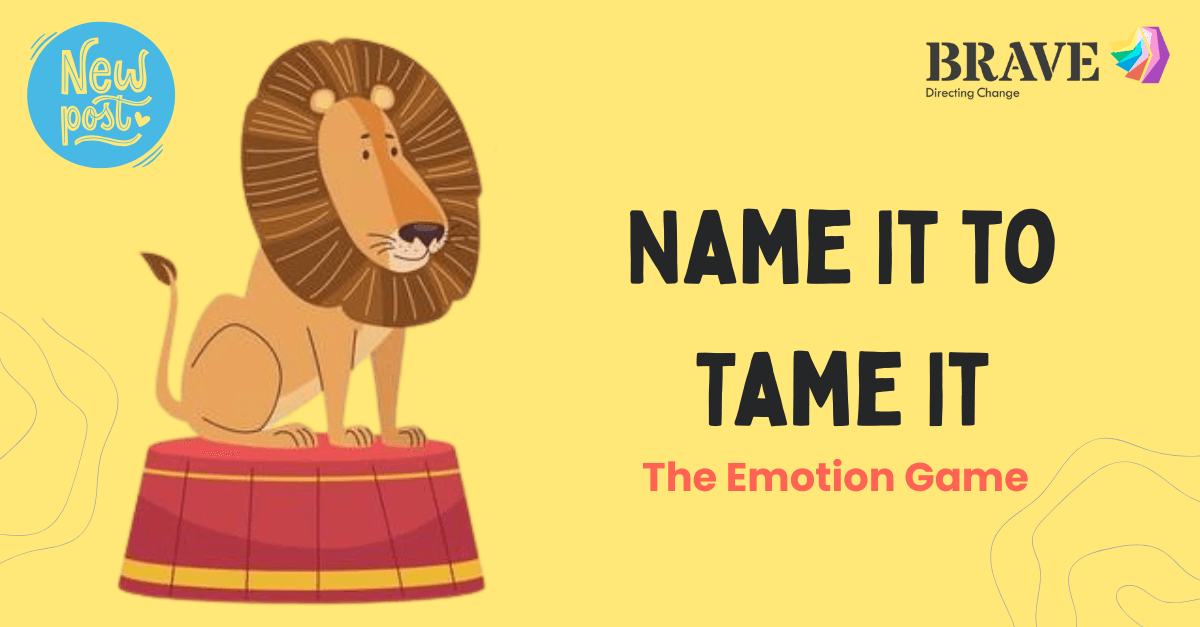
Name It to Tame It – The Emotion Game

Do you ever get that weird, restless feeling where everything feels a little…off?

It’s almost a nagging sensation and can often be attributed to something you’re feeling but haven’t spotted yet. It’s a stowaway emotion.

This is where learning to name your emotions comes into its own. No, It’s not some fluffy self-help trick or the latest TikTok fad, this one is based on considerable research from psychologists around the globe. If you like, it’s just basic emotional hygiene. Like brushing your teeth, but for your brain instead.

Let’s be honest: most of us treat our emotions like distant relatives at a wedding. We nod politely, pretend we remember their names, and hope they don’t sit next to us during dinner. But here’s the thing, those emotional guests? They’re not going anywhere. They live with us. Rent-free. And if we don’t start calling them out by name, they’ll soon outstay their welcome.

Still not convinced?
Think of it like this: emotions are like toddlers. If you ignore them, they’ll scream louder. But if you kneel down, look them in the eye, and say, “Hey, I see you’re upset because your banana broke in half,” they calm down. (Well, most the time).

The same goes for your inner monologue. Our emotions want to be seen. Named. Recognised. Acknowledged. They’re happening for a reason. Learning to name your emotions is a part of developing emotional intelligence.

When you say, “I’m feeling anxious,” instead of “I’m just off today,” you’re not being dramatic, you’re actually being precise.

You’re shining a light on a problem making it easier to see. Once you give it a label, the brain knows how to react and in turn your nervous system calms down. You don’t have to fix the emotion right away. Just saying, ‘Hey, I see you’ can take the edge off.

And finally, remember, all of your emotions can benefit from a name so don’t let the positive ones sneak past unnoticed! Calling out when you’re proud, curious, satisfied and excited is good hygiene too and it helps your brain balance its emotional intake.

We deliver Emotional Intelligence sessions at all levels so if you want to be able to Name It to Tame It then get in touch. We’d love to help.

Sara