We believe that everyone has untapped potential locked away inside them. There’s a multitude of reasons why it’s stays hidden, but we know it’s there. Using a 121 Coach can help you unlock that power.

But there’s a catch. It needs to be unique to you. Working with a 121 coach gives you a personalised plan, not some generic cookie cutter version that’s been used before.

We’ve researched a few reasons that will help you see what booking some coaching sessions could do for you. Let’s get started. 

No two businesses (or people) are exactly alike. What works for one person might not work for another. Enter stage left: 121 BRAVE coaching. Having a coach is like having a bespoke suit made just for you. Tailored advice, custom strategies, and goals that actually make sense for your unique situation. No more cookie cutter rinse and repeat solutions for you!

It can help you see the forest and the trees 🌳

Have you ever felt like you’re stuck in the daily grind and can’t see beyond your to-do list? A coach provides an outside perspective that can help you see the bigger picture. It’s like having a friendly satnav to help you navigate through the dense forest of business challenges. Less wrong turns, less swearing and hopefully no emergency stops! 

It creates the perfect peer pressure 👊

Remember in January when you promised yourself you’d hit the gym every day, but somehow the chocolate digestives keep on disappearing? A coach helps keep you accountable. They’re like that annoying gym partner who actually shows up and makes sure you do, too. With a coach, you’re less likely to let things slide and more likely to achieve those goals you’ve been procrastinating on.

It reignites the fire for learning 🔥

One-to-one coaching is all the benefits of learning but without the boring lectures and rules. You still get to learn new skills, develop existing ones, and apply them directly to your work but there’s no corridor conversations, playground bullies or hideous school dinners.

It’ll boost your confidence 🚀

Let’s be honest: we all have moments of self-doubt, especially in the business world. Imposter Syndrome is a thing! A coach can help boost your confidence, offering encouragement and validation when you need it most. A great coach helps you grow and spot your own progress along the way. 

You can navigate new networks 📌

Your coach is likely to have a network of their own, and they can introduce you to new contacts, opportunities, and resources that you might not have discovered otherwise. Think of it as expanding your circle without having to face those awkward networking events (and not a single crumpled business card in sight!)

121 coaching in business isn’t a luxury; it’s an investment in your personal and professional growth. 

Whether you’re a seasoned entrepreneur, or just starting out to someone who needs some signposting having a coach can help you reach your full potential—and have a little fun along the way. 

If you’re interested in finding out more about BRAVE 121 Coaching you can arrange a FREE 15 Minute Conversation with us using the link below 👇. We’d love to hear from you. 

Sara and Rhi. 

The Power of Focus

In the increasingly busy world in which we live, and work, the ability to focus on your goals can be the defining factor between success and failure.

Imagine going on a journey without a map or a clear destination? Jumping on the tube without knowing which direction you needed? We all know that confusion, distraction and frustration can quickly take over.

The same applies to everything you do. Whether you’re aiming to improve some specific problems, complete a business project or advance in your career, maintaining laser-sharp focus is essential to achieve your objectives.

Why Focus Matters?

Focus allows you to clearly define your goals and develop a personal roadmap to achieve them. It helps you prioritise your tasks and allocate your resources effectively, ensuring that every step you take brings you closer to the outcome you need.

When you concentrate on your goals, you can better shrink those distractions and optimise your productivity. Getting to a place of heightened efficiency means you can accomplish more in less time, making your efforts more impactful.

Having a mindset that’s laser focused helps to keep your motivation levels high. Constantly reminding yourself of your goals helps you stay driven and committed, even when faced with the inevitable challenges. Perseverance is all about getting back up and having another go, even when you don’t want to.

Focus enhances your decision-making abilities. With a clear understanding of your goals, you can evaluate options more effectively and make choices that align with your long-term vision. Using Decide BRAVE principles can help you in navigating the road to get stuff done!

Set Specific, Measurable Goals
Remove Distractions
Practice Mindfulness
Be Self-Disciplined
Keep Learning
Be Open to Change

At We Are BRAVE we can help you, your teams and your business to focus on what really matters.

Get in touch to find out more.

Setting Workplace Boundaries

Congratulations! You are still in the world of work, but have you noticed the strange sensation creeping in of never being able to get away? Feeling a sense of ‘uber-connectedness’..? You are not alone.

If you know you need some coping strategies to fend off your tech-savvy colleagues (and overly enthusiastic AI) whilst they all compete to see who can “circle back” to you the fastest, then setting some boundaries at work has never been more critical.

Here’s how to stay sane while keeping both your digital and human co-workers in check and maintaining that all important work life balance.

Nearly every workplace now has that AI assistant that schedules meetings for 8:00 a.m. on a Monday because it is “optimised for productivity.” Remember: AI works for you, not the other way around. Use clever prompts to reprogram the way it works for you and get it to prioritise “work-life balance” (a.k.a. scheduling all your meetings during your most caffeinated hours).

Yes, your boss can now appear as an avatar directly into your teams call to check on your latest report, but that doesn’t mean you have to accept every call to interact with it! Activate “Do Not Disturb” mode when you need time alone to do your day job without interruptions. Having focus time like this allows you a boundary and safe thinking time.

When you receive a “Can you just quickly look at this…” message at 10:00 p.m., remember that “Sure, I’ll look into it tomorrow” is perfectly acceptable shorthand for “This is not happening tonight, Steve.”

Try disabling notifications at a certain time period or moving the app to a page you don’t look at as much. Your brain needs time without work to rest & recharge.

In-office perks have evolved to include anything from wellness pods, fruit and yoghurts to AI-coached yoga, but don’t let the allure of a “mental health Thursdays” trick you into staying late or interacting in the evening if it’s not your thing. Practice some polite declines with lines like, “I’d love to, but I’ve got other plans”, or “I’m all done with work mode for today, I need some home time”

If Speaking Up and saying the words needed to set boundaries sounds a little too scary for you, don’t panic! We get it, and we’ve got you. Check out our online courses to get braver with your boundaries.

Finally, if someone tries to overstep your boundaries, you can use technology to help you in subtle ways. Try an out of office message that clearly states your working hours, or gently reminds people of your working days so that the subliminal message is there: This. Is. When. I. Work.

Setting boundaries at work is about balancing technology with your humanity.

Remember: you’re not just an employee; you’re a person and we all have different limits, expectations and wants and needs.

Sara & Rhi

The Power of Genuine Authenticity at Work

In today’s workplace, full of LinkedIn posts, AI and faking it till you make it, authenticity is more important than ever. In fact it’s what makes you stand out

It’s more than just a buzzword; it’s a key ingredient to building trust, fostering collaboration, and enhancing your overall well-being. But, we also know that being authentic can feel challenging in professional environments where conforming, performing pressure often dominates the landscape.

At We Are BRAVE, we believe that cultivating authenticity starts with your own self-awareness and intentionality.

Here are six practical ways we think help you bring your true self to work.

  1. Know Your Values and Align with Them

Authenticity starts with understanding who you are and what matters most to you. Take time to reflect on your core values and how they align with your role.

•   Ask yourself: What drives my passion for this work?

•   Identify moments where your actions align—or clash—with your principles.

When you consistently act in accordance with your values, you create a sense of inner harmony that others will recognise as genuine.

  1. Speak Up, and Practice Open and Honest Communication

Transparent communication fosters trust and authenticity. Whether you’re collaborating with teammates or engaging in difficult conversations, aim to speak openly while remaining respectful. Being able to Speak Up and be heard in the right way displays an inner confidence many will be drawn to.

•   Share your thoughts, ideas, and feedback without fear of judgment.

•   Admit mistakes when they happen. Authenticity is often demonstrated in vulnerability, not perfection.

By expressing yourself clearly and honestly and speaking up when the time is right, you show others that your words and actions are reliable.

  1. Embrace Your Unique Set of Skills

You bring something valuable to the table—your unique background, experiences, and abilities. No-one else has what you have!

Celebrate these qualities and use them to add a personal touch to your work.

•   Avoid the trap of mimicking others to fit in. Instead, find ways to shine by being yourself.

•   Seek roles and projects that allow you to leverage your strengths while learning new skills.

By leaning into your individuality, you’ll inspire others to do the same.

  1. Listen Actively and Show Empathy

Authenticity isn’t just about expressing yourself; it’s also about understanding others. Being genuinely present in conversations and showing empathy for colleagues fosters meaningful connections.

•   Pay attention to verbal and non-verbal cues during interactions.

•   Validate others’ perspectives, even if you disagree.

This reciprocal understanding strengthens relationships and builds a culture of authenticity within your team.

  1. Set Boundaries to Protect Your Energy

Being authentic doesn’t mean overextending yourself or sharing everything with everyone. Setting healthy boundaries ensures you can stay true to yourself without compromising your well-being.

•   Learn to say “no” to tasks or commitments that don’t align with your values or priorities.

•   Be mindful of how much personal information you share at work, balancing openness with discretion.

Boundaries help you maintain authenticity by preventing burnout and preserving your integrity.

  1. Stay Open to Growth and Feedback

Authenticity isn’t static—it evolves as you learn and grow. Be willing to adapt while remaining true to your core self.

•   Seek feedback from colleagues and mentors to gain insights into how you’re perceived.

•   Reflect on this feedback to refine your approach and behaviours.

By showing a commitment to self-improvement, you are role modelling an authentic willingness to grow and adapt to new challenges.

Why we believe this is important.

Authenticity is a journey, not a destination. It requires self-awareness, intentionality, and courage. By incorporating these six strategies into your daily work life, you’ll not only build stronger professional relationships but also enjoy greater satisfaction in your role.

At We Are BRAVE, we’re passionate about helping individuals and teams unlock their potential through authentic leadership and personal growth.

Contact us today to learn how we can support your journey to authenticity at work!

Sara & Rhi

Unlocking Potential with the Pygmalion Effect.

Imagine a teacher who truly believes in the potential of their students.

The interactions they display shows they holds high expectations, they communicate belief in their abilities, and invests time in their development. Surprisingly, more often than not, these students often rise to the occasion, performing better and achieving more.

This phenomenon is known as the Pygmalion Effect, a compelling demonstration of the power of expectations.

The Pygmalion Effect was studied in the educational context by Robert Rosenthal and Lenore Jacobson in the 1960s. In their seminal experiment, they informed teachers that certain students were likely to be “intellectual bloomers” based on fictitious test results. These students, randomly selected, showed significant academic improvement over the school year, purely because their teachers expected them to succeed and unconsciously provided more support and encouragement.

This effect isn’t limited to classrooms. In the workplace, managers who believe in the capabilities of their employees often see higher productivity and job satisfaction. Similarly, athletes who are expected to excel by their coaches frequently surpass their performance benchmarks. The underlying mechanism is simple yet profound: belief shapes behaviour. When we believe someone will succeed, our actions towards them—whether in providing feedback, opportunities, or emotional support—create a self-fulfilling prophecy.
We see this in action when we deliver our BRAVE programmes to our clients. The culture we create is high support & high challenge and this allows the delegates to feel safe and grow their potential.

Harnessing the Pygmalion Effect involves conscious effort. It requires you to recognise potential, provide encouragement, and create environments where high expectations are the norm. Whether you are a leader, a manager, a coach, or a parent, your belief in others can be a powerful catalyst for unlocking potential.

In essence, the Pygmalion Effect is a testament to the transformative power of positive expectations.
By believing in the potential of others, we don’t just predict the future—we help shape it.

If you’d like to start embracing the Pygmalion Effect into your business then get in touch with us.

We’d love to help. Click the contact button below.

The Antidote for Fear is Curiosity

Fear and curiosity are like separate light switches in our brains — they cannot be on at the same time. 

When fear lights up, our curiosity dims; when curiosity takes over, our fear fades into the background. This clever dynamic gives us a powerful tool for managing fear….by making our curiosity just 1% stronger. And that takes bravery. 

The Science Bit. Fear and Curiosity

Fear is our evolutionary onboard warning system designed to protect us from danger. It’s deeply hardwired into our brains, especially in the amygdala, which triggers the fight-or-flight response when it senses a threat. 

On the other hand, curiosity — our desire to learn, explore, and understand — is driven by a different region of the brain like the prefrontal cortex, which handles higher-order thinking.

The fascinating thing is that these two states can’t coexist fully. When we are deeply curious, our brain shifts its focus from self discovery (fear) to discovery and learning. 

How to Make Curiosity 1% Stronger Than Fear
Imagine you’re about to step on stage to give a presentation. Your heart races, your palms sweat, and your mind floods you with thoughts of failure. This is fear taking the driver’s seat. But what if you could shift that energy toward curiosity? 

What if, instead of thinking, “What if I fail?” you asked, “I wonder what it will feel like to succeed?” or “What can I learn from this experience?”

By making curiosity just 1% stronger than fear, we create enough of a shift to open ourselves up to new experiences. 

Asking questions — especially questions that begin with “What if…?” or “How might…?” — can help reframe a fearful situation into an opportunity for discovery.

Or how about this alternative example? 

Imagine you’re heading into a potentially difficult conversation where there will be some disagreement. Naturally we can feel apprehensive and inevitably our fight or flight system will start to kick in. 

Getting curious about how you might feel in this situation and then consciously choosing a couple of thought out questions will become your next magic trick! When you Ask these questions it not only helps you to listen and gives you control of your fight or flight response but as a result, it also helps you to speak clearly and get your point across more effectively. Boom! ???? 

Bonus Tip: When we train this we always suggest it’s helpful to write down those questions because when faced with fear, our brain cannot always find the right words.

Here’s three simple steps to activate your curiosity in moments of fear:

Ask Open-Ended Questions
The next time fear strikes, counter it with questions that spark curiosity. Instead of asking, “What if it all goes wrong?” try asking, “What might happen if it goes right?” or “What new skills or experiences will I gain from this?” Open-ended questions steer your mind away from fear’s narrow focus and toward possibilities.


Be BRAVE & Show Up
Taking small steps toward the unknown can help build bravery. Even if you’re afraid, showing up to learn more about what scares you is a great first step. Attend that meeting, speak up, disagree or debate or simply ask someone to share their experience.


Develop Self Awareness 

Developing your self awareness of when fear or curiosity is in control is crucial. Learning to spot when your fear is in the driver’s seat is the first step. Once you notice it, you have the power to flip the switch by choosing curiosity.

When we choose curiosity over fear, we are being BRAVE. You’re choosing to expand your world rather than contract it. By choosing Curiosity it propels you into new territory, helping you grow, learn, and evolve.

Need more evidence? 

Think about it: Every significant innovation, discovery, or achievement in history was driven not by fear, but by a sense of wonder and a desire to know more. 

Fear might have kept us safe in the caves, but curiosity is what pushed us to explore, learn, and thrive into the world we have now. 

If you want to start flicking the curiosity switch more often and build your skills through BRAVE, get in touch and start the conversation today. 

Sara 

Why you need to review your business goals.

By now you’ll already know that regularly revisiting any business goals is crucial to ensure that your business remains on track and adapts to any unforeseen changes in the market. Everything changes at a rate of knots, so it’s rare to be chasing the exact same thing your forecasted over 6 months ago.

Reviewing business goals halfway through the year provides an opportunity to evaluate your performance, identify new challenges, recognise successes and most importantly take action where you need to.

Building in time for a reflection period allows you to make strategic adjustments, such as reallocating resources, revising budgets, provide training or coaching solutions or even to simply shift priorities to match the current state of play. A mid-year review also fosters accountability and motivation among your team, ensuring everyone is aligned with their objectives and a reminder of why they are doing what they do!

Ultimately, a mid-year review is about staying agile and responsive, setting your business up for success for the remainder of the year.

If you’ve recently done this and need training, coaching or other BRAVE interventions now is the time to reach out. BRAVE isn’t just about conflict resolution, we can help you challenge the status quo, change the norm and be BRAVE.

Not sure where to start?

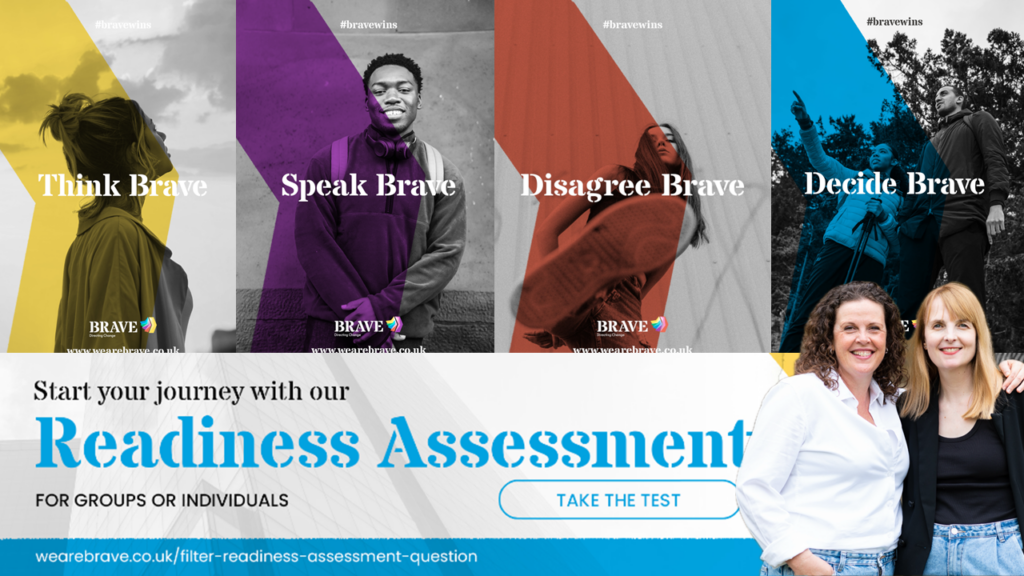
You can take our FREE online personal or team assessment on our website to work out how BRAVE can help you.

Unlocking Potential with the Pygmalion Effect.

Imagine a teacher who truly believes in the potential of their students.

The interactions they display shows they holds high expectations, they communicate belief in their abilities, and invests time in their development. Surprisingly, more often than not, these students often rise to the occasion, performing better and achieving more.

This phenomenon is known as the Pygmalion Effect, a compelling demonstration of the power of expectations.

The Pygmalion Effect was studied in the educational context by Robert Rosenthal and Lenore Jacobson in the 1960s. In their seminal experiment, they informed teachers that certain students were likely to be “intellectual bloomers” based on fictitious test results. These students, randomly selected, showed significant academic improvement over the school year, purely because their teachers expected them to succeed and unconsciously provided more support and encouragement.

This effect isn’t limited to classrooms. In the workplace, managers who believe in the capabilities of their employees often see higher productivity and job satisfaction. Similarly, athletes who are expected to excel by their coaches frequently surpass their performance benchmarks. The underlying mechanism is simple yet profound: belief shapes behaviour. When we believe someone will succeed, our actions towards them—whether in providing feedback, opportunities, or emotional support—create a self-fulfilling prophecy.
We see this in action when we deliver our BRAVE programmes to our clients. The culture we create is high support & high challenge and this allows the delegates to feel safe and grow their potential.

Harnessing the Pygmalion Effect involves conscious effort. It requires you to recognise potential, provide encouragement, and create environments where high expectations are the norm. Whether you are a leader, a manager, a coach, or a parent, your belief in others can be a powerful catalyst for unlocking potential.

In essence, the Pygmalion Effect is a testament to the transformative power of positive expectations.
By believing in the potential of others, we don’t just predict the future—we help shape it.

If you’d like to start embracing the Pygmalion Effect into your business then get in touch with us.

We’d love to help. Click the contact button below.

The Importance of Having Brave Conversations

In the world of business, and increasingly in our personal lives too, learning to have brave conversations is crucial for genuine connection and growth.

These conversations—marked by honesty, vulnerability, and courage—are vital for personal development, healthy relationships, and meaningful change.

As part of our BRAVE Conversations module we focus on these skills, and many more to equip you with the skills and behaviours you need to do it well.

We’re passionate that when you learn the skills of BRAVE Conversations it can only create positive action. Whether you use it at work with your boss or a team member, or you’re using the skills for a tough conversation with a parent or a best friend, we know the extra benefits you’ll gain are worth it.

Here’s just a few reasons we think BRAVE Conversations are so important.

They Build Trust and Deepen Relationships

BRAVE conversations foster trust. When you’re honest and open with others, you create a safe space for mutual understanding and respect. This deepens relationships, making them more authentic and resilient.

Being BRAVE Promotes Personal Growth

Facing difficult topics head-on encourages self-reflection and growth. It challenges you to confront your fears, biases, and assumptions, leading to greater self-awareness and personal development.

Bravery Drives Positive Change

Whether in personal relationships or in the workplace, BRAVE conversations are catalysts for change. They address issues that need resolution, facilitate problem-solving, listening skills, decision making and handling disagreements. They pave the way for improvement and innovation.

Being BRAVE Enhances Emotional Intelligence

Engaging in BRAVE conversations hones your emotional intelligence. These are skills we can all work on. It requires empathy, active listening, and the ability to identify and then manage your emotions in a way that works best for the situation you’re in.

BRAVE Conversations Cultivate a Culture of Openness

In organisations, and in relationships, BRAVE Conversations contribute towards a culture of openness and transparency. They encourage team members to share ideas, speak up, provide feedback, make informed decisions and collaborate effectively, leading to a more dynamic and inclusive environment.

Approach these conversations with empathy and an open mind. Remember, the goal is not to win but to understand and be understood.

Starting a BRAVE conversation can be daunting, but it begins with a willingness to be vulnerable. We have some really easy to follow Quick Tips on our Instagram Account – @wearebraverebels

If you think we can help you on an Open Workshop, or a team in a business session then reach out and we’d be happy to book in a time to chat with you.

The Power of Pivoting

The Power of Pivoting: Embracing a BRAVE New Direction

When we decided to add a new dimension to We Are BRAVE we knew it was the right thing to do, but that didn’t mean it didn’t come with a lot of thought!

Those are just some of the questions we pondered before we came to the decision that in life, and in business, the path forward is not always a straight line. Sometimes, the most powerful and transformative decision you can make is to pivot and change direction and embrace new opportunities.

That led us to add in several new streams of business. We added Open Workshops for both businesses and individuals, created a new Individual Readiness Assessment and created our BRAVE journals. Phew…now we need a lie down!

We thought it might make sense to show you why we believe that the power of the pivot is underrated!

Pivoting Opens New Opportunities

Pivoting allows you to explore new avenues and opportunities that might not have been fully visible before. By changing direction, you can discover new passions, hidden talents, and unique possibilities that align with your goals and values.

Pivoting Fosters Resilience

Embracing a pivot requires bravery and adaptability. This process builds resilience, teaching you to handle uncertainty and setbacks. The ability to pivot strengthens your problem-solving skills and prepares you for future challenges. Staying as you are is an option, but a life without change can get very stale.

Pivoting Encourages Growth and Learning

Taking a new direction often involves learning new skills and acquiring fresh knowledge. This continuous learning process keeps you engaged and motivated, fostering both personal and professional growth. It’s a dynamic way to keep evolving in an ever-changing world. We live by these principles and they’ve helped us to embrace the power of the pivot.

Pivoting can Align with Your True Self

Sometimes, your initial path may not reflect our true desires or values. Sometimes we have to go where the money takes us, or the business needs to be. Pivoting allows you an opportunity to realign with what genuinely matters to you. It’s a courageous step towards authenticity, ensuring your actions and goals get another chance to be included in what you do.

Pivoting Enhances Creativity and Innovation

Pivoting definitely pushes you out of your comfort zone (we certainly felt like that for a little while!) It does this by encouraging innovative thinking and creative solutions. By stepping into that unfamiliar territory, you often challenge yourself to think differently and this can help you develop unique approaches to new situations.

Pivoting Can Start with One Step

Pivoting can be intimidating, but it starts with a simple step. Evaluation. By reflecting and acknowledging that any change is a natural part of growth. Assess your current situation, identify where you want to go, and take the first small, yet deliberate step towards your new direction.

Surround yourself with supportive individuals who can offer guidance and encouragement. That one can make or break a pivot!

Remember, the power of pivoting lies in the bravery to take control of your journey. Embrace the change, trust the process, and unlock the potential that comes with every new direction you choose to take.

Sara & Rhi