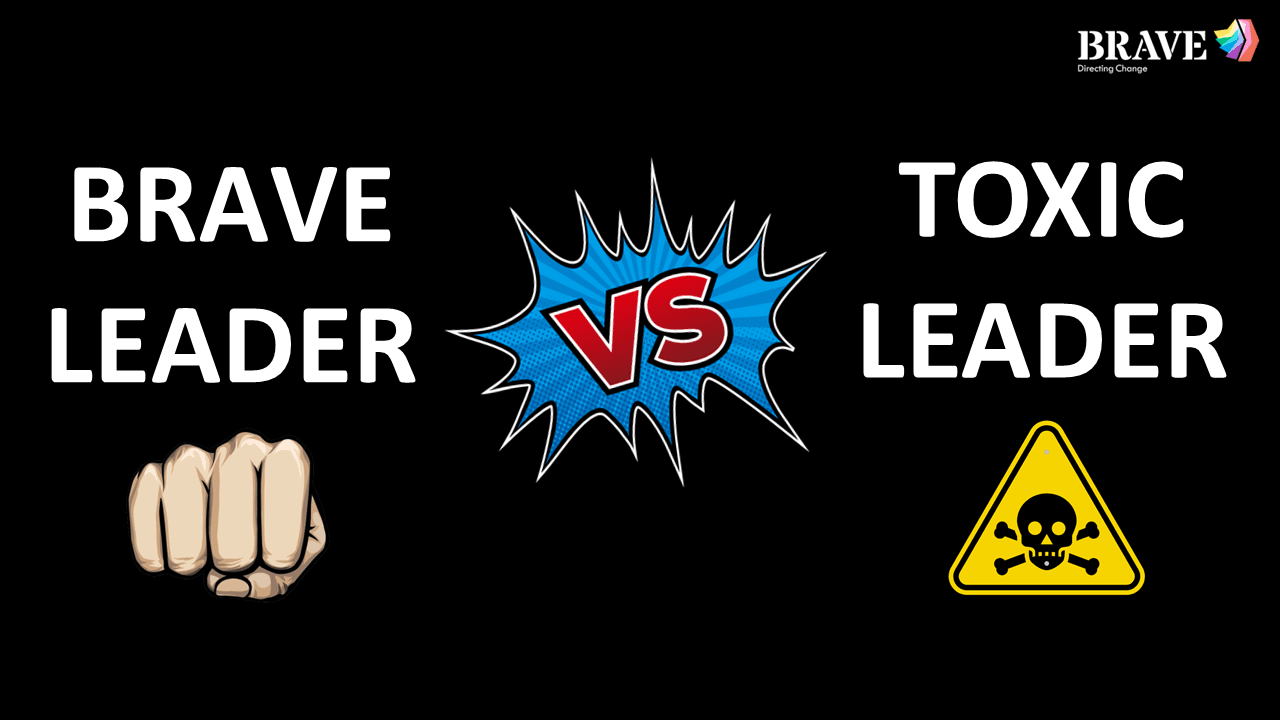
BRAVE Leader VS Toxic Leader

When you work with a Toxic Leader, you might not see it at first, but when you do…

Use our downloadable BRAVE Leader VS Toxic Leader to help you spot the signs and then learn the right way to lead BRAVE.

Putting the Return in the ROI

In an industry which lets face it, is driven by transformation, Learning & Development has always been the champion of growing potential. 

Whether it’s via nurturing talent, unlocking performance, or simply helping organisations adapt to an increasingly ever-shifting landscape. But in C-Suite and Board meetings across every sector there’s one metric that still causes raised eyebrows and big question:

Working as Strategic Partners 

We know it’s no longer enough to just deliver engaging workshops or beautiful eLearning platforms. Stakeholders want evidence. They want data. CFOs want figures. And rightly so! When budgets are in focus, the ability to demonstrate tangible impact along with real, measurable ROI can often be the difference between L&D being seen as a strategic partner or a “fluffy nice-to-have.”

Why this Matters?

At its core, ROI isn’t just about the numbers. We’re talking about people here. It’s about telling a narrative. It’s telling the story of how the learning intervention moved the dial, whatever that was. 

Whether it’s reducing turnover and enabling critical debate, or boosting engagement and decision making, by linking our initiatives to outcomes that matter to your business, we don’t ‘just’ justify the spend, we elevate the value of the learning itself.

What does this mean?

Our clients will often ask us to help people to be ‘better’ at having more challenging conversations. This is a great start and providing the skills and structure to do that is right up our street, but what does that mean for your objectives/goals/outcomes? What do you want to see as the change in your own bottom line? If people are having those conversations, how will you know it’s happening? 

These are some of the questions we’ll ask you up front, to help connect the investment you make to a tangible metric you’re looking to shift.

Moving from Intuition to Insight

We know this part can be a challenge. It’s always been a little ‘woolly’. Much of learning’s impact is often delayed, indirect, or simply tricky to capture. But that’s not a reason to avoid it, it’s a reason to get better at it. 

At We Are BRAVE we partner with you to design with clear KPIs in mind from the outset, using data to track behavioural shifts and embedding feedback loops. We turn your investment in us from a cost centre to a tangible change in behaviour and outcome. Building on the above example, we set out to review not just the change of skills on the course but also when they are back in their day-to-day roles. What is the line manager doing and seeing? What about their peers, are they seeing change? How has this shifted the approach within the team and with their other relationships?

Our magic is the Learning Diamond 💎

The initial conversations we’ll have with you after identifying the right metric, will identify the impact of the wider relationships on an individual’s ability to change their skills and behaviour after the course ends. The Learning Diamond makes this easy to follow, and likely engages and involves line managers, peers and senior level support focused on how they too can help or hinder this change? 

Why spend this time with us?

You want your people to show up with the skills and confidence to speak up, have braver conversations and ultimately make better decisions. We both want you to see return on investment. By spending the time answering our questions helps us to get you real, measurable change.

Got an issue you need to address and are not sure where to start? 

We’d love to talk to you. 

Understanding Leadership Styles

Looking to better understand the different styles of leadership?

Look no further. This is what you need, and it’s free to download.

Use this alone, or with your teams, and if you want some more help, you know where to find us.

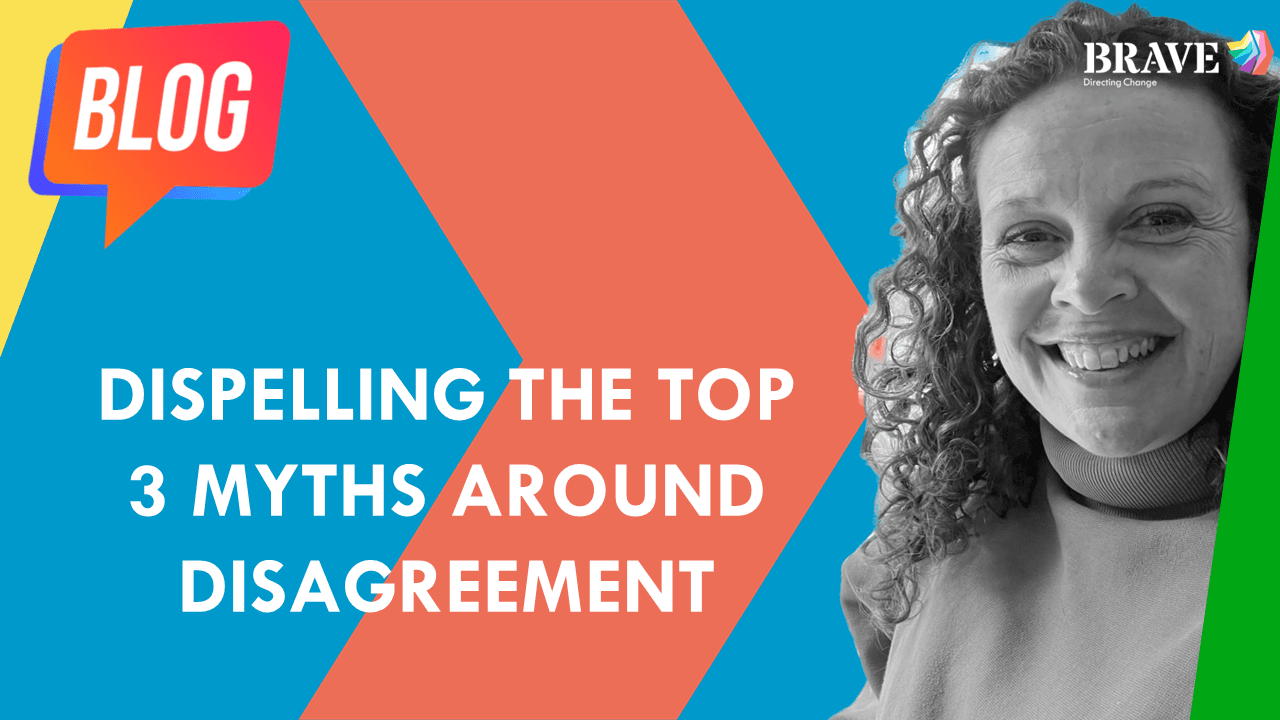
Dispelling the Top 3 Myths around Disagreement

At We Are BRAVE disagreement is our thing. Crazy right..? Well, not when you know how to disagree well and make it your superpower. 

In this article I’ll dispel the top 3 myths on disagreement and introduce you to three pillars that can guide you to success. They are Structure, Discipline and Skill. 

But first, Why dispel the myths?

You don’t have to; there is always a choice. It could be that your current relationships and the level of discomfort you feel about disagreement means you can maintain a reasonable level of resilience in your work or personal life, but if that’s not working for you, keep reading. 

Myth Number 1. It’s better to have difficult conversations ‘in the moment’.

With this myth, we convince ourselves that having a conversation ‘in the moment’ is better and less stressful because it’s over and done with quickly – well, technically it is, but only for you. The problem is, it’s often not a repeatable or helpful conversation and so the stress level continues from conversation to conversation.

We’d suggest replacing this myth with Pillar 1 – Structure. Using this helps you speak up and disagree well in the moment. 

Myth Number 2. I can just wing it – I don’t need to prepare, I know what I need to say.

With this myth, we can congratulate ourselves a little on our approach because it can give us a short-term, but potentially false, sense of confidence. We feel brave, we know what we want to say and so away we go…

For this one you need Pillar 2 – Discipline. By learning to develop your own discipline to follow structure, control your EQ and be focused on resolution, not winning.

Myth Number 3.  We’ll fall out and it will damage our relationship so I just won’t address it.

With this myth, we can avoid the possible discomfort or upset by replacing the conversation with avoidance. We doacknowledge that this is a good short-term strategy to help you find the right time for a conversation, but as a long-term strategy, it will only increase stress levels.

The final Pillar 3 – Skill. It’s all about utilising your skill and we can teach you exactly how to do that on our training programs. 

These pillars are an introduction to our methodology. We use these simple tools to break through the myths around disagreement and increase your individual resilience within those conversations. It can feel empowering to know you can approach harder conversations with simple changes and who knows, maybe even learn to enjoy them!

In summary

In the short term, using these simple pillars to build small, repeatable steps into your routine gives you a strong foundation for braver conversations on topics you may have avoided.

In the long term, shifting your perspective and embracing well-formed disagreement will increase your ability to innovate into the future. 

Sara

The No Fear Culture of Spanx

Fearless Leadership through Embracing Failure by Lucy Lim.

Sara Blakely, the founder and CEO of Spanx, achieved the accolade of the youngest self-made female billionaire in 2012 at 41. Starting her business in 2000 with $5,000, Blakely built an empire in innovative hosiery and underwear. Like the brand ‘Hoover, ‘Spanx’ has become synonymous with all shapewear brands. Blakely could not have done this with entrepreneurial spirit alone; her leadership style has been instrumental in Spanx’s success over the decades since its inception.

Reframing Failure

Blakely credits elements of her success to her father’s reframing of failure at the family dinner table during childhood. Blakely’s father would ask the children what they had failed at and what they had learned from it, causing Blakely to see opportunities for growth in every misstep. Blakely enshrined this ethos into the Spanx culture and coined the Spanx ‘Oops Moments.’ Oops Moments are learnings from mistakes. Employees are encouraged to share with the broader team, creating a culture of psychological safety, vulnerability and learning, leading to improvements.

Supportive Leadership

Blakely’s leadership style of encouragement, support and motivation has seen Spanx thrive through the years and remain one of the world’s most popular shapewear brands. Instead of creating a fear culture where people can’t take a risk for fear of failure, the Spanx ‘Oops moments’ are there to encourage a safe space for growth, innovation and improvement. Prioritising work-life balance and a supportive environment make employees more resilient, creative and productive. Furthermore, the focus on experimentation and learning through failed attempts bolsters a growth mindset culture at Spanx.

Walking the Talk

Blakely leads from the top by displaying authenticity, fallibility, vision and determination. Encouraging risk-taking, supporting her team and making failure safe creates and continues a successful and innovative brand.

Blakely’s leadership qualities not only continue her success, but they filter throughout the culture at Spanx, set the tone for the whole workforce and have wider-reaching influence over those who follow and admire her.

Lucy Lim is an energetic go-getter and a proud rebel working with We Are Brave as an Associate.

Does the ‘Let Them Theory’ Work, at Work?

Mel Robbins’ “Let Them” theory is a mindset shift that encourages us to let go of the need to control others and focus on what we can control — ourselves. While this concept is often discussed in personal contexts, which I loved, it also has intriguing implications for the workplace, which made me ask the question:

At its core, the answer I think, is Yes! The theory is about emotional boundaries so in a work setting, this could mean letting colleagues express their opinions, make their choices, or even make mistakes without trying to micromanage or fix them. Instead of expending energy on controlling others, the focus shifts to managing your own reactions, setting clear boundaries, and maintaining your peace.

This approach can be particularly effective in fostering a collaborative and respectful work environment. By “letting them,” you create space for diverse perspectives and empower others to take ownership of their actions. It can also reduce workplace stress and burnout, as you’re no longer carrying the emotional weight of trying to control situations or people.

However, it’s not without challenges. The “Let Them” theory requires a level of self-awareness and emotional maturity that might take time to develop. Just because you have it, doesnt mean the person you are working with also does. It also doesn’t mean ignoring issues or avoiding accountability. In a professional setting, there are times when intervention is necessary—for example, addressing unethical behavior or resolving conflicts.

Ultimately, the “Let Them” theory can be a valuable tool for improving team and workplace dynamics, but it works best when it’s carefully balanced with clear communication and accountability. It’s about knowing when to step back and when to step in—a skill that can transform not just your work relationships but your overall approach to professional life.

Here’s a practical look at how the “Let Them” theory might unfold in a work setting

Imagine you’re a team leader working on a group project. One team member insists on trying a risky approach despite some skepticism from others. Instead of shutting down their idea, you allow them to proceed while setting clear expectations and deadlines for results. Their approach ends up revealing unexpected benefits that improve the project overall. By “letting them,” you created room for innovation and empowered your team member to take ownership of their idea, boosting morale and collaboration.

Now try this one instead, picture a team member consistently showing up late to meetings, which disrupts the team’s productivity. Applying the “Let Them” theory might lead you to tolerate their lateness under the belief that it’s beyond your control. However, in this case, “letting them” could enable behaviour that negatively impacts the team and undermines accountability. Here, of ocurse, the better course of action would be addressing the issue directly and setting expectations for punctuality.

The key takeaway for me is that while the “Let Them” mindset can enhance work relationships, it must be applied thoughtfully.

Knowing when to step back versus when to intervene makes all the difference.

Sara

How To Politely Say No.

Do you find it hard to say no? 🛑

We used to, but over the years we’ve developed our skill set 🧰 so we can confidently, and politely, say No ⛔️ (and not feel guilty about it.) ✅

Interested? 🤔
Grab your FREE Downloadable Guide here:

When Did Boundaries Become The Latest Buzzword?

Not that long ago the word boundaries made you think of fences and “no trespassing” signs and were rarely talked about outside of council planning meetings. Now, in 2025, it’s a become a staple of workplace conversations, training courses, and of course, Instagram memes!

While boundaries aren’t an entirely new concept ( therapists have been preaching about them for decades), their current refocus in the world of work can probably be traced back to a big increase in societal burnout.

All pre cursors to burnout.

Add in a pandemic in 2020 and people collectively hit the pause button. Work-from-home blurred the lines between work and life, with Zoom and Teams calls intruding on dinner and endless notifications pinging constantly. This helped set the scene for the mass realisation that we all need limits—not just on screen time but on energy and emotional bandwidth, too.

Social media played its role, naturally and helped the message spread fast. Influencers started talking about boundaries like trendy accessories, swapping stories about saying “no” to meetings and setting strict “do-not-disturb” times. Before long, “boundaries” became a mainstream conversation topic.

So, what happens when boundaries work their way into the workplace?
We think it’s a good thing, though we understand that employers often have mixed views. When the business takes the first step, it seems to work much better because the teams feel respected and empowered. No one really wants to be the one sending emails at midnight and taking calls all weekend. Establishing some clear expectations (like “don’t call me after 6 pm unless it’s life-or-death”) creates a culture where people know their time is valued, as are they.

Boundaries have been proven to also reduce burnout. It’s like giving the team an emotional seatbelt—they can safely navigate high-stakes projects without flying off the rails into exhaustion. And less burnout means fewer sick days, higher engagement, and, let’s face it, probably a few less awkward HR meetings involving tissues and tears.

For businesses, embracing boundaries can enhance productivity. When teams have the freedom to unplug, recharge, and say “no” occasionally, they return to work with fresh ideas and renewed focus. Plus, boundaries foster creativity—because let’s be honest, great ideas don’t come when you’re mentally fried from working on emails at ten pm the night before.

But, are Boundaries here to stay?

We think they’re not going anywhere. This doesn’t feel like a 2025 fad that will come and go. It feels like our workforces are just getting a bit smarter with how they work.

We think what it shows is part of a fundamental shift in how we work, live, and interact these days. By embracing boundaries, all businesses can create healthier, happier environments for employees and maybe even themselves.

If you need help with taking the lead and getting boundaries into your businesses or teams then reach out and let us do the heavy lifting for you. We can deliver online of face to face training and even provide 121 coaching to help you through it.

Find out more and book your places here: Setting Boundaries – BRAVE

Sara

How to Develop Your EQ Guide

Emotional 🧠 Intelligence is without doubt the secret 🤫 hero when it comes to Modern Leadership 🥇

It might be seen as the new kid on the block, but it’s fast 💨 overtaking many other qualities on the race to the top 🔝of the leadership mountain!

Learn more by swiping through the guide to pick up the top tips.

You can talk to us about EQ workshops to develop you and your teams skills and you can download this guide, for free, now.

Yep. You heard right.

Free. Gratis. Nada. Zilch. Zero.

No money, no problem!

Five Ways to Grow Your Team Without Spending Money
Helping your team develop doesn’t always require money. With a little creativity, you can help them grow without spending anything. There is always a time for spending on personal development, and when you get that right, the value speaks for itself. But for those times where the cash is gone, here are five practical ideas to get started:

1. Set Some Stretch Goals

Stretch goals are big, bold targets that push your team to think differently and try new approaches. They’re tougher than everyday goals but can spark innovation and growth. Work with your team to set goals that challenge them and give them the support they need to succeed.

2. Have a Coaching Conversation

Coaching conversations can help your team tackle problems and build new skills. Instead of offering solutions, ask thoughtful questions like:

  • What’s getting in the way?
  • What would success look like?
    Listen actively and guide the discussion to help them find their own answers.

3. Encourage Peer Learning

Let your team learn from each other by pairing them up or forming small groups to work on projects. Peer to peer learning helps them share ideas, give feedback, and work through challenges together. It’s a simple way to build skills and teamwork without any cost.

4. Let Them Lead

Invite team members to lead a workshop, team meeting, morning huddle or even deliver presentations. It’s a great way for them to start seeing other avenues for growth and begin building confidence and leadership skills. Start with topics they’re comfortable with but challenge them to go a step further.

5. Find Free Learning Resources

There are plenty of free learning options available—webinars, online courses, and even local industry events. The We Are Brave Resources page contains blog posts, articles and free downloads too! Explore these opportunities to help your team grow and gain fresh perspectives. If your company pays into the apprenticeship levy, you can of course make use of this too and provide fully funded qualifications at no cost.

No levy? No problem! Did you know that hundreds of businesses gift their levy to help those who do not have it so there’s no reason you cannot still fund your teams learning this way.

You can learn more about that here: Find a business to fund apprenticeship training


Even with limited resources, there’s so much you can do to help your team thrive. These ideas are just the beginning—get creative and find ways to invest in their growth. When you are ready to invest some of your hard earned budget get in touch, and see what we can do to help you.